Japanese Shochu

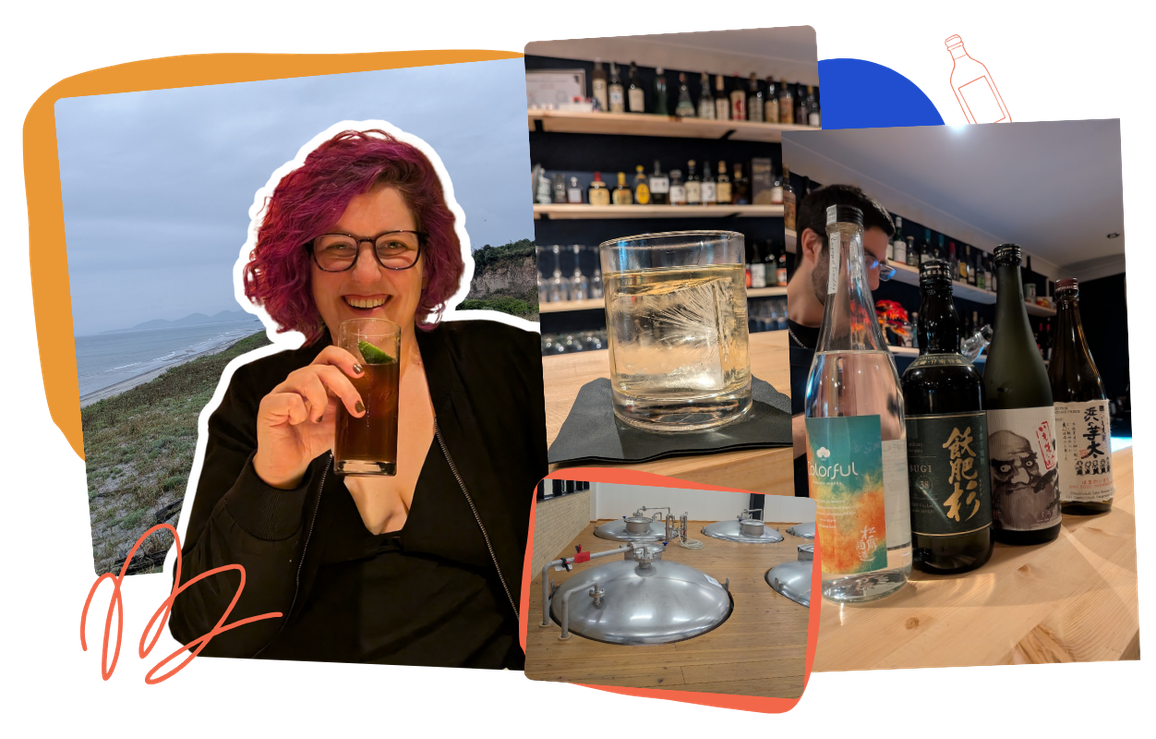
Shochu is the national spirit of Japan, yet it’s largely unknown outside the country.
In this episode, we're traveling to Kyushu, the “kingdom of shochu,” where distillers use local produce to make a truly unique spirit that can be enjoyed in any number of ways.
We’ll talk to Julia Momose, a world-renowned bartender and author, to understand exactly what makes shochu so special—and how to order it on your next trip to Japan.
By the end of this episode, you’ll be able to navigate this complex category and order like a pro. Plus, you’ll have some fun facts to impress your friends with!
Japanese Shochu
Listen to this episode to hear all about:
- How this hyperlocal spirit represents the diversity of Japan's crops and geography
- The +50 different crops you can use as a base ingredient for shochu
- Why you don't typically find it in cocktails
- And all the different ways to order it during your next trip to Japan!
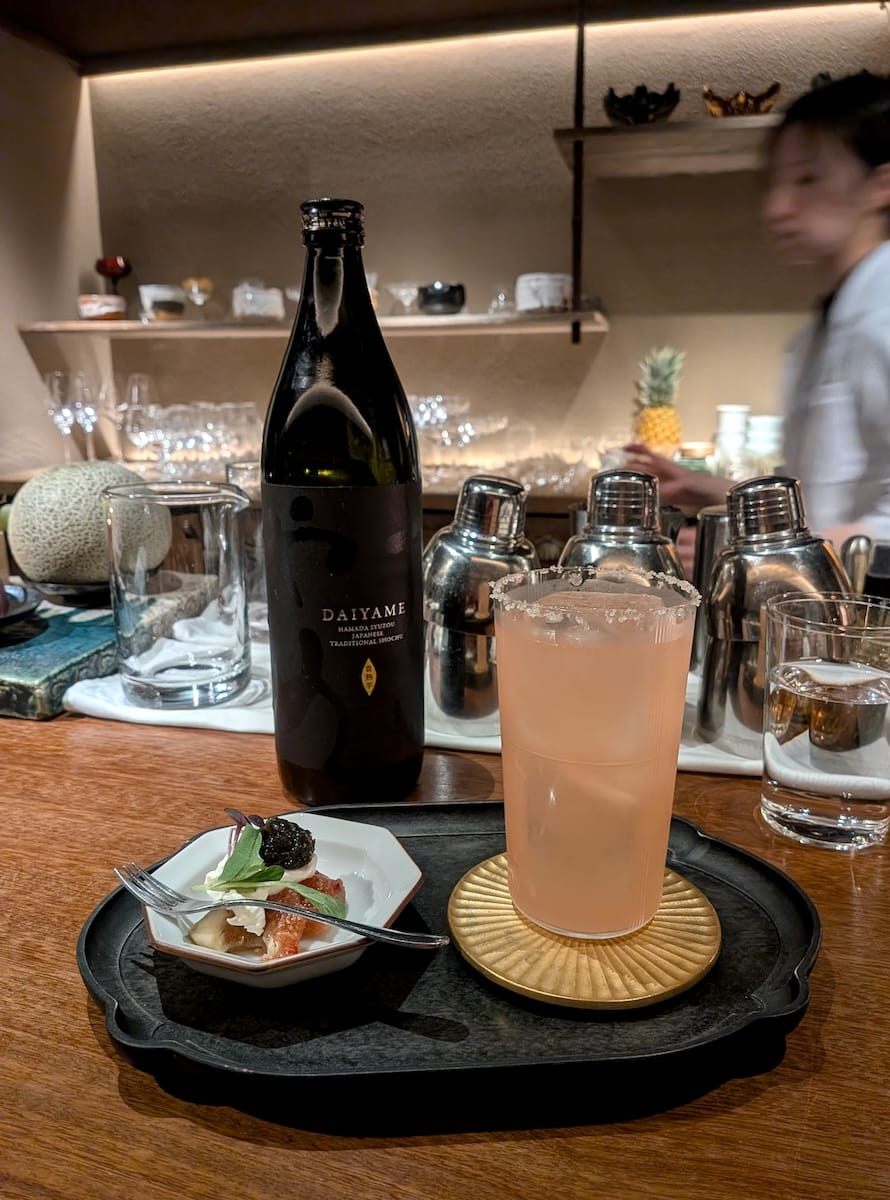
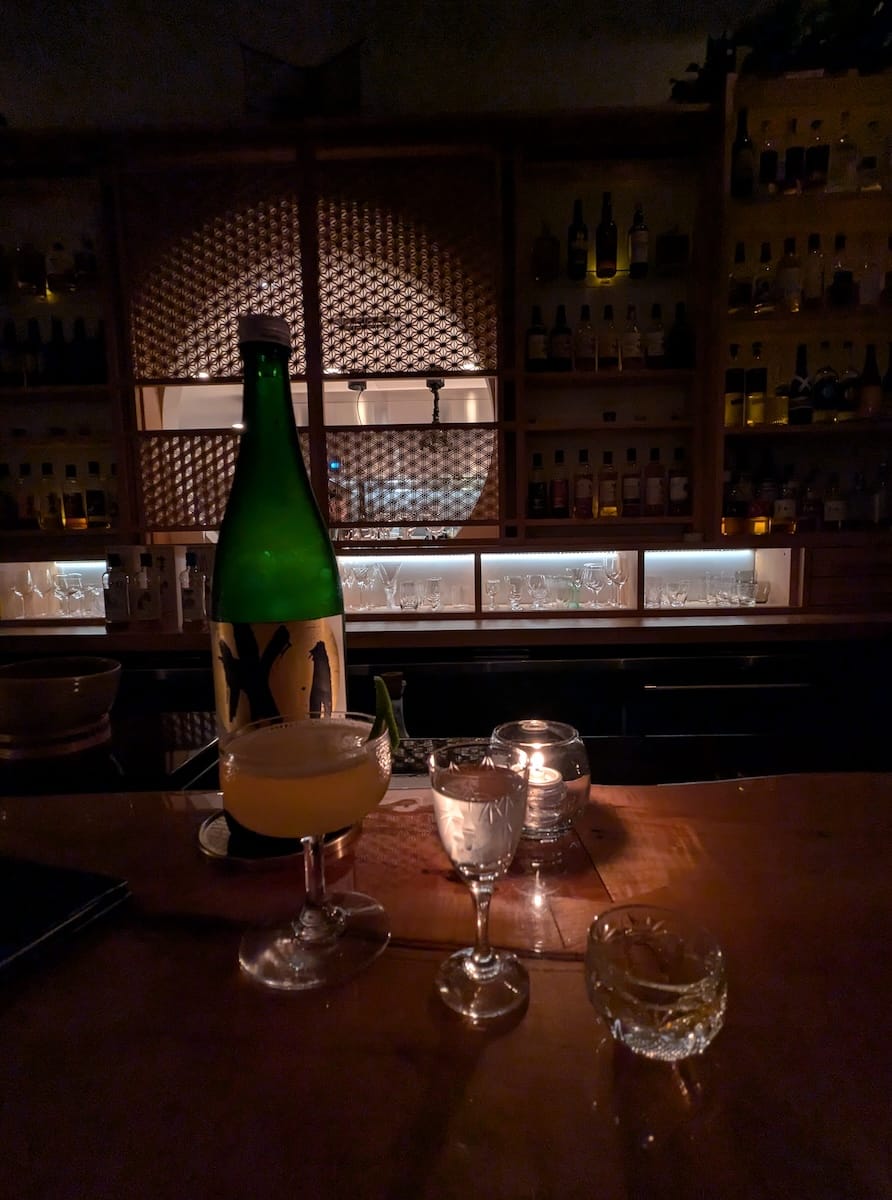
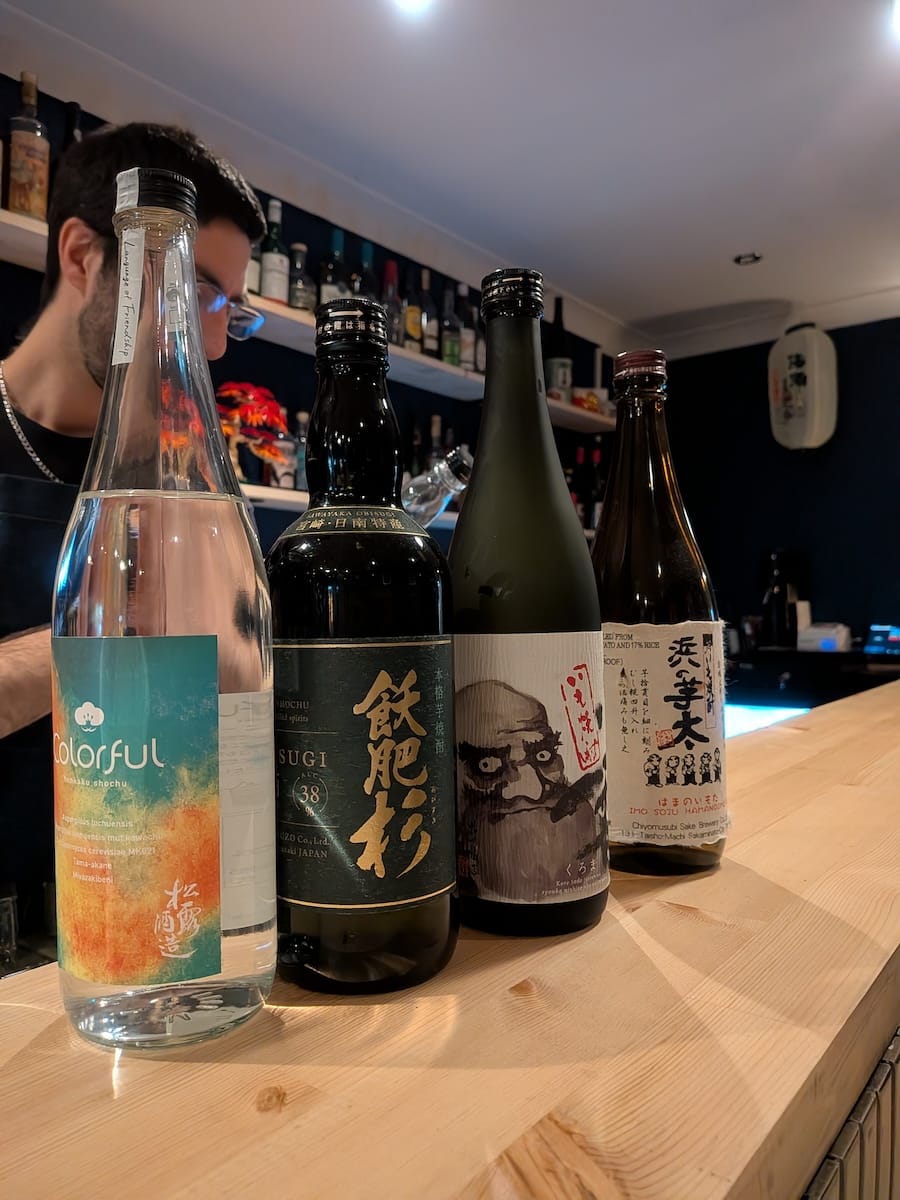
Drinking shochu on three continents! L-R: Folklore (Tokyo), Kumiko (Chicago), KOME (Edinburgh) © Between Drinks 2026
More from this episode
Transcript
00:00 Show Intro
00:30 Episode Intro
01:35 Intro to Shochu
02:40 What is Shochu exactly?
05:08 Why it’s confused with soju
07:37 History of shochu
08:30 How it’s made
11:30 Fermentation & Koji
14:43 Distillation & Aging
16:22 Shochu Regions
18:05 Kagoshima
21:30 Serving Shochu
26:11 Shochu cocktails
30:03 Picking bottles of Shochu
34:37 My advice & wrapping up
Show Intro
Welcome to Between Drinks, a podcast where we travel the world one drink at a time.
I’m your host, Caro Griffin, a mezcal sommelier, traveling bartender, and all-around drinks nerd.
In each episode, I’ll take you somewhere new to dive into a local drink with a story to tell. We’ll talk about its history and how it’s made, but also its connection to the place and the people that make it what it is.
There’s a great story behind every great drink, and I can’t wait to share them with you.
Episode Intro (00:30)
When you start planning a trip, there are the things you already know you want to do. Maybe they inspired the trip itself, or they’re just rooted in what you know about the place.
These lists get longer - and go deeper - as you start doing more research, and, of course, they get tailored to people’s individual interests.
But there is also a second category of things - ones that we only learn about once we get to the place and realize that, hey, tamago sandos and 7-11 highballs are a thing, and a great thing at that! But shochu rarely makes any list at all.
Shochu is the most consumed spirit in Japan, far surpassing sake and whisky. And yet, you rarely encounter it outside of Japan unless you specifically go looking for it. And even then! You gotta be in a pretty well-stocked liquor store.
Even in Japan, I don’t feel like foreigners are introduced to shochu that often. It’s always around, but it’s not something you’re going to end up drinking if you don’t seek it out or have someone who tells you that you need to try it… just because most of us don’t realize how quintessential it really is.
Because, while there are dozens of sake tastings on sites like Airbnb Experiences or Viatour, however you pronounce it… There’s not a single one dedicated to shochu.
Introduction to Shochu (01:35)
Caro: Let’s start with the basics. How do you explain or describe shochu to people who've never heard of it?
Julia: The quick intro to shochu, like that one-liner, is that it's the national spirit of Japan, and it's extremely special because it's made with a mold called koji, which turns it into a spirit unlike any other.
That was Julia Momose, a world-class bartender who is the creative director and executive chef at Kumiko, a great dining bar in Chicago.
She also wrote one of my favorite books, The Way of the Cocktail, which not only has some great cocktail recipes but also dives into all things related to Japanese drinks and bar culture.
It even has a list of great bars in the back that led me to some really good nights in Japan [ha]… and several Google Translate conversations with these very old-school bartenders were like, “How did you even find us??”
Julia is how I found you, my guy! [Laughs]
So, if you enjoy this season or are planning your own trip to Japan, I highly recommend picking up a copy of her book for a deeper dive that’s from a Japanese perspective.
What is Shochu? (02:40)
Caro: Maybe this is too controversial a question to start with, but I've often heard people refer to shochu as Japanese vodka. Do you think that's fair?
Julia: It is not fair. And that's partially because of that special mold called koji. But it goes further into what shōchu actually is. And by legal definition, there are two different types of shōchu. One is kōrui shōchu, which is a multiple-distilled shōchu… Which, it would be fair to say it's kind of like vodka because every essence of that original ingredient, the base ingredient, is stripped away.
Then there is Honkaku Shochu, which translates to authentic or traditional shochu. And to be called Honkaku Shochu, the producers must follow a few different steps. And at their essence, the goal is to highlight the main ingredient. It's meant to smell like something, to taste like something, to evoke something. And that, in its essence, is the complete opposite of vodka, which is odorless, flavorless, colorless, tasteless.
Shouchu is clear for the most part, though it can be aged; but it is full of aroma and flavor, and that's where it is so far from vodka that we couldn't possibly begin to compare them.
So… what is shochu?
Well, like Julia said, at the highest level, there are two types:
Korui shochu is maybe best described as table shochu.
It’s made from bulk grains or molasses and is distilled in a way that strips away most of the flavor from those base ingredients.
It’s super common, cheap, and easy to drink, so it’s used in the canned highballs you find in 7-11, and it’s often served at izakayas, aka Japan’s version of like, a casual gastropub.
Honkaku shochu is the high-quality stuff.
Honkaku means authentic or genuine, so that’s what you’ll want to look for when buying your own bottle, and mainly what we’ll be talking about in this episode.
The base can be made from over 50 different ingredients, but rice, barley, and sweet potatoes are some of the most common ones.
They’re all fermented with koji, the same wonderful little black mold we learned about in the sake episode. And after fermentation, it’s distilled just once to retain all the wonderful, earthy flavors.
These are a few of the things that make shochu a really unique spirit, but before we go any further, an important note…
Soju interlude (05:08)
Julia: One fact, or one thing that I'd like to bring in because… sometimes it's the first thing that I say, and it's that shochu is not soju, because there's a lot of confusion around that, right?
Partially because Japanese is not everyone's first language, or even second language. [Laughs] Sometimes it's just, you know, that language that we know sushi, we know ramen. We know karaoke. But even then, the way in which we, a lot of, in America, a lot of people pronounce it like… Sake, they say sak-e and karaoke, they say… What is it? Karaoke? I can't even do it. [Laughing]
Caro: Yes, I love that you struggled to say how we say it with an American accent. Yes, karaoke. [Laughing]
Julia: Yeah, sometimes it’s just like switched around.
So, shochu is often pronounced soju, but the thing is, soju is actually a thing. But soju is a similar but different spirit that comes from Korea. And I think that that's an important thing to note, too, because some people, when they hear shochu, think soju. They think about that fun green bottle that they had that tasted like bubble gum once [laughs]... so just to be so clear that shochu is not soju.
And so, just to make that note, because when we are looking at labels and picking out a shochu, there may still be in existence some bottles of Japanese shochu that say soju on the label, which only furthered the confusion around all of this.
And that's simply because, until very recently, especially in places like California, the government didn't recognize shochu as its own spirit category. It was a non-defined term or word.
For businesses in California that have beer and wine licenses, they can also carry spirits that are of 20% ABV and below. And there are shochu and soju that are 20% ABV and below. And so shochu producers put soju on their labels because that was recognized and allowed… in order to be able to be in these markets.
That's the only reason why the word soju is on those labels. I know it's super confusing, and it's usually like the one English word [laughing] that's really clear on the labels too…
So, there you go, folks! If you’ve been picturing little green bottles of something that tastes like bubblegum, that’s not what we’re talking about here.
Japanese History (07:37)
The earliest record of shochu dates back five hundred years—when people in Kagoshima, the southwestern tip of Japan, started making a local spirit out of rice and grains.
And this was fine, but not exactly cost-effective.
The soil in Kagoshima is volcanic and sandy, which isn’t good for rice or barley, but it is good for sweet potatoes. And so, by the late 1700s, sweet potatoes were Kagoshima’s staple crop and most popular base ingredient for what we now know as Honkaku shochu.
To this day, Kagoshima is the largest producer and consumer of shochu, and they’re known for their great sweet potato, or imo, shochu.
But it doesn’t stop there!
Arguably, the coolest thing about shochu is that it can be made with so many different base ingredients.
This not only gives us an incredible variety of flavors but also allows shochu to represent the diversity of Japan’s regions and crops in a really unique way.
How it’s Made (08:30)
Julia: It depends on my mood or what I’m eating, which shōchū I reach for, and that's part of the beauty of it too, is that being that it's meant to taste like that from which it is made, there are also…
One of the other rules with shōchū is that just over 50 ingredients, around 54 ingredients that are approved for hōnkaku shōchū, which means that the flavor profiles available are extremely vast, as you can imagine.
But beyond that, there are some other rules around making shōchū which also contribute to even more styles within a single type of shōchū.
And when I say type of shochu, we're breaking it down into what it's made from. What's that main ingredient? So, common ones - rice, barley, kokuto, which is a black sugar, sweet potato, buckwheat... And each one of those is very, very distinct. But even within those categories, we can dive into certain types. And I tend to lean towards those more softly aromatic styles of shochu, which are a result of vacuum distillation.
And the thing with hōnkaku shochu is that it can only be distilled one time, but the producers can choose which still they use, whether it's a vacuum still or an atmospheric pressure still.
With a vacuum-distilled shochu, you get a softer, you could say… some people use a more elegant profile, and then for the atmospheric pressure distilled shochu, they're gonna be a little bit rounder, more robust, and can lean into some more earthy and savory flavor profiles. So, when it comes to that vacuum distilled shochu, I lean in towards rice shochu quite a lot, just like on ice, usually, sometimes with some club soda.
I also love a sweet potato shochu, which, if you say that in Japan, people might think that you'd be like really intense, funky, earthy shochu, but there are some that are made on a vacuum still that are using yellow koji and are fermented at low temperatures. And so you're seeing all of the softer sides of the sweet potato, which I think is so, so exciting and so cool.
So, I could lean more rice, I could lean more sweet potato, but it kind of depends on how I'm feeling when I'm eating, or if you know it's wintertime, I might want a more earthy, robust barley shochu where they're roasting the barley before fermenting and distilling. It's super nutty and toasty and comforting, and that in an oyuwari set with hot water is… there's unlike anything else. It's fantastic.
Caro: I’m a big fan of sweet potato shochu, but I feel like now… I really want to try two sweet potato shochus, like the vacuum-distilled and the other style, to kind of compare them side by side.
Julia: Yes.
Caro: I’m going to have to put that on my list next time I’m at a bar with good shochu… next time I’m at Kumiko! [Laughing]
Julia: Yeah, please.
Fermentation & Koji (11:30)
No matter what base ingredient you start with, all shochu is made more or less the same way.
And, if you’ve listened to our last episode on sake, then you’ve already met the most important part of the production process: koji.
Julia: So, koji is a mold, and I think it's really important to just get that out there and again be open with it. I think that whitewashing occurs so often with these beautiful, like indigenous spirits around the world, where people are weird talking about yeast sometimes, right?
And I think mold is something that gets a pretty bad rep in the food/beverage and in the life world. When we say like black koji, you know, if you're like, black mold, right? Automatically, that's pretty scary. And so just to put it out there, that it's a very specific type of mold. So, Aspergillus oryzae is kind of where we start off.
But this mold carries a very special function where it can break down carbohydrates, complex carbohydrates and break them down into sugars. So, a sacrification agent is kind of typical, say.
And the reason why mold is so… this mold is so important for shouchu production is because shouchu is, in its essence, a fermented and then distilled product. And so, rice doesn't have naturally occurring sugars it is all just you know starch and proteins and so, without koji, without something to convert those starches into sugars, there's nothing for the yeast to eat to convert into alcohol… fermentaiton just wouldn't happen it's a non-starter so koji is that magic that makes it all possible, it makes it happen.
And just to put out there as well… People have been enjoying koji, maybe whether they've known it or not, for some time now. If they have enjoyed miso or soy sauce, or Japanese sake, all of these things start off with koji fermentation.
There are three main types of koji used in shochu production, and they can each give the spirit different aromatics, flavors, and even a different mouth feel:
- Black koji is known for its complex flavors with rustic, funky, and sometimes citrusy notes. It’s super common in Kagoshima’s iconic sweet potato, or imo, shochu.
- White koji, meanwhile, adds a softer, slightly sweet flavor with a rounded texture and more muted aromatics. It produces a gentler, smoother spirit often described as clean and mild.
- And, finally, there’s yellow koji, which is traditionally more common in sake, but when used in shochu, it’s super aromatic and can create floral or fruity flavors.
Each of these kojis is going to behave differently during fermentation and bring out different flavors in the final shochu.
Julia: You put them side by side it would be hard to tell in a blind tasting, if you're not familiar with shochu, that these are both made from rice… because they're so different and I think that's such one of the magical things about shochu is that it can be made from rice, but then we get to be like, well, which rice is it? Which koji are they using? How many days are they fermenting it? How many times are they adding fresh ingredients into that fermentation tank? What still are they using? Where's their water coming from?
Like, all of these different things create a completely different product.
And so, as we're talking about what to look for on labels, sometimes you just have to buy it. Sometimes you have to be like, I want to explore this rice shochu or this sweet potato shochu.
Distillation & Aging (14:43)
Honkaku shochu - the original, authentic stuff- undergoes a single distillation in a pot still.
Most spirits are distilled at least twice, but the more times you distill a base liquid, the less flavor it retains. That’s why spirits known for being flavorful - like rum, and mezcal - are distilled twice, whereas something like vodka - which is known for being flavorless - is distilled three times.
And, so it’s an important distinction that Honkaku shochu is only distilled once. It’s what helps preserve the flavor of that base ingredient so that you can still taste notes of the rice, barley, sweet potato, or whatever else they’re using.
Julia mentioned different types of stills, so let’s briefly talk about the difference:
- Atmospheric pot stills are the regular, or traditional, stills. They heat the fermented mash to a high temperature, extracting aromas through chemical reactions.
- Whereas vacuum pot stills are a newer, more tech-savvy method that reduces pressure inside the still. It’s a gentler process overall, with lower temperatures, so it can yield shochu with lighter, fruitier profiles.
After shochu comes off one of these stills, it’s “rested” so the flavors can meld or mellow.
This is usually done in unglazed clay pots for about a year, but sometimes producers will use barrels or experiment with longer time periods. But unlike whisky, shochu isn’t really aged per se. At least not normally.
And that’s because, to call it honkaku shochu, you can’t add anything but water after distillation, and it has to be colorless.
So even when producers do age it, the liquid has to go through an additional step of lightening by blending with a lighter-colored shochu or filter out the coloring entirely.
Shochu Regions (16:22)
Julia: So, typically, it'll be where it is coming from is a fun place to start. And this kind of ties into well, thinking about shochu as an agricultural product, where are certain things grown in Japan? For the most part, we're going to see shochu coming from Kyushu.
What we think of as mainland Japan is actually four connected islands, and the southwestern one is called Kyushu.
There are three big cities along that western coast, and this is where we're going to be spending most of the episode, so I want to give you a little crash course.
- At the top of the western coast, you have Fukuoka, which produces great rice and barley shochu.
- Just south of that, you have Kumamoto, which is known for producing rice shochu with a delicate and smooth flavor profile.
- And then at the southwesternmost point, you have Kagoshima and its famous sweet potato shochu, which we’ve already talked about. They're the largest producer and consumer of shochu in Japan.
I love this whole area of Japan because it’s off the beaten path… but there's a still path, if you know what I mean. It feels so calm compared to other Japanese cities I’ve visited, especially the further south you get.
If Tokyo and Osaka are on one end of the spectrum, then Kyoto is somewhere in the middle… Fukuoka’s a bit further, and Kagoshima is about as far as you can get from like the hustle and bustle of Tokyo and still be in a real city.
It’s a little warmer, a little more relaxed, and people were so friendly and eager to make me feel welcome, even though English was more limited, and I speak a dozen words of Japanese… and as you may or may not be able to tell from this episode, my pronunciation could use some work. [Laughs]
But Kagoshima is also the kingdom of shochu.
Which is ironic because I originally went there to drink whisky… but I’ll save that story for the next episode…
Kagoshima (18:05)
Julia: Kagoshima is an area known for sweet potato. It's actually an area of Japan that used to be called the Satsuma region of Japan. It's where sweet potatoes were first introduced, and that whole… the name for sweet potatoes is satsuma imo. Imo is potato, satsuma is that region, so potatoes from the region of Satsuma are sweet potatoes. And from there we have so many different varieties and such.
But satsuma shochu holds a G.I., a geographic indication, for a style of shochu. It's shochu made from sweet potatoes from Kagoshima. That water, koji from the area, fermented there, distilled there, bottled there, et cetera.
And so when you see a Satsuma shochu, you know you're getting really high-quality sweet potato shochu. And there'll be a little… It looks like a little teapot, but it's a little shochu pot, like logo on that bottle. So, that's like a really good thing to look for, is any of the bottles that have satsuma shochu, like noted on them.
For rice shochu, we see a GI for that coming from Kumamoto in Kyushu, and Kumamoto is known for their rice, and it's called a kuma-jō-chu. It's coming from specifically the Kumamoto, the Hito-Yoshi Basin, which has this underwater stream of just really pristine soft water that they're using, and rice, of course, being from there is held in very high regard and quality, and so that'll be like that soft or delicate style.
There is, from Amami Island, which is part of Kagoshima, actually, but off the coast. It's a really tiny island that has… it holds such a beautiful culture, very distinctive to Amami, outside of the culture of Kyushu, outside of the culture of Japan, and there is where you can get Kokudojo-cho and this is a really specific one because…
Even if you were to follow every single rule and distill kokuto anywhere else in Japan, you could not call it kokuto shōchu. It must come from this one tiny island. And so that's a super special style because, of course, there aren't very many producers of it. And kokuto shōchu is this stunning, like mineral-driven… Is it, you know, brown sugar notes that I'm getting? Or is it like grassy? Is it funky, or is it like umami-driven? There are so many different things you can get from different types.
Kokuto is super, super cool. Kokuto shocho actually is one that I like to suggest to agave spirit drinkers, to mezcal drinkers. And sweet potato is another one that I really like to suggest for like those flavor profiles and stuff…
As of 2017, there were over 350 Honkaku shochu distilleries registered in Japan, and 45% were located in Kyushu.
But that’s not to say that the shochu game starts and ends with Kyushu…
Julia: If you see a shochu coming from outside of Kyushu, that's actually pretty exciting. And that means that it's really leaning into very specific ingredients. So if you find those, I would say like dive in and get them.
An example might be a buckwheat shochu coming from Nagano, because Nagano is a very mountainous region. We think about, you know, the Winter Olympics back in the day, like lots of mountains, so not conducive for rice fields in the way that we farm in Japan. But buckwheat does really, really well there. So buckwheat shochu from Nagano is a thing.
Serving & Drinking (21:30)
We talked in the last episode about how sake has its own unique cups and carafes, and serving methods, and well, shochu takes that to a whole other level.
I’ve never come across another spirit that’s drunk quite like shochu.
For starters, you can drink it neat or on the rocks, just like any other spirit, but it’s also lower in alcohol because of the single distillation.
That may be seen as a con to some folks, but for others—especially those embracing no and low-alcohol drinks—shochu is a really nice option because of the lower ABV.
It’s almost always distilled at 25% ABV or lower, and then it’s often diluted further with water. So, on top of just being a good drink in general… It’s a great option for folks who want a fun drink but also maybe want to take it easier.
Julia: At its most simple, it's shouchu and water. And water, we could start a fun brainstorm of how many different forms does water take, right?
You had mentioned with hot water, oyuwari. And this is a really important one, I think. If I could, I would love for people to try shouchu in this form, for their first taste, actually. Just a little bit of hot water and float a little bit of shochu right over the top. And this is the more traditional way of doing this serve. And I think this is a fun place to just note the intentionality that is involved in the production and the enjoyment of shochu is part of why I love it so much.
Depending on the order in which you pour the shouchu and the hot water into the glass, you'll capture different aromatics off the front as well as the flavor will change ever so slightly, just the way we perceive things. And the fact that all of these things are counted for and noted, I think, is really exciting.
But the way in which I was taught to do oyuwari by producers… it was in Kagoshima actually, is you take like a heftier glass and it could be a beautiful ceramic or it could also be like a hefty old-fashioned glass and you pour your hot water in and it's not like boiling hot water it's like you know just off the boil it'll probably be around 190 degrees Fahrenheit or so at this point. You want to let it come down in temperature a little bit.
And then you're gonna pour your shochu, and we'll usually just go straight from the bottle, but pour it somewhat angling towards the side of the glass so it comes in at an angle to create a swirling effect in the glass, and it'll swirl over the top, and it'll start to dissipate into the water. You'll see it, and that's why it's fun to do it in glass because you can actually see the shouju interacting with the water, and then you'll be immediately just hit with all the aromatics from the shochu, whatever it may be.
And in this way, you get some of the alcohol, too, will kind of evaporate straight off, which is nice, which will leave like all of the aromatics that are more enjoyable. Because once the ethanol is out of the way, you start to get into, well, here is that, you know, brown sugar note from the sweet potato that I love so much, or here's this like orange blossom note coming through from this rice shochu, whatever it may be.
Ratio-wise… Some people like equal parts, 50-50. That's pretty bold and intense. Usually, we'll see something more like four parts. Four parts shōchu to six parts water is pretty typical.
And the phrasing that we do in Japan will be go-go, which is five-five. So one-to-one, but we just say go-go, so five-five. And then there's yōng-roku, which is four to six, or roku-yōng, which is six to four if you’re feeling more intense.
I like to just free pour it, but I do tend to lean in more so to the four-part shochu to six-parts water, especially when I'm serving it at Kumiko. I think that's just a really enjoyable way to dive into it.
Caro: I'm going to be replaying this recording before my next Japan trip to like master, or at least attempt to master, this pronunciation, so I can like act like a cool person who speaks a little bit of Japanese next time I order Shochu.
So you said the 6-4 was your preferred way to serve it at Kumiko? Does it change it all by like the style of Shochu, or is that pretty universal?
Julia: Pretty universal, it does change by ABV though. So, this, you know, 5.5 is based off of shochu that's up to 25% ABV.
We may see shouchu, you know, at 43% ABV, and to do that would be much more intense, which is why we'd wanna go much more water compared to the shochu.
Only recently has shochu made its way into cocktails, and that’s part of a bigger conversation happening in Japan right now.
Cocktails (26:11)
Julia: Shochu in general is not enjoyed in cocktails in Japan until very recently. And there's actually a massive amount of pushback from the Japanese bartenders' associations about having shochu in cocktail bars because cocktail bars in Japan have been so focused on Western spirits and the Western style, which they innately made very much their own, very much Japanese, but all Japanese classic bartending came from the West initially.
And that's another thing that's important to remember when it comes to, again, the national spirit of Japan and how it's enjoyed is that it's not only revered for being the national spirit of Japan and held just so closely in people's hearts and in lot of ways protected where there are producers who are like, do not drink my shochu on ice, only drink it with hot water.
There's that level of intensity around it. But there's also this level of almost like people turning their noses up to it and disdain towards it, as it is the, you know… Shochu is for the people, not for fancy cocktail bars, right? [Laughing] Not for the aristocrats who are entering these spaces.
Caro: Yeah. This is how mezcal used to be. It was like the poor people's drink, you know? Like it was…
Julia: Yeah, there's like a deeper cultural nuance to these spirits. And I think that that's an important thing to be aware of in general. And as we are bringing shochu into our bars and hopefully our homes, too, recognizing that this is the spirit for the people. Like, you can enjoy it simply, and mostly enjoy it how you like it. Like, explore a little bit, find out which type of shochu you love.
If you want to really nerd out, find out which koji you prefer and which distillation method you really lean into. But at the end of the day, whether you're drinking it with hot water in the wintertime and then, you know, with Fanta in the summertime, like, whatever brings you joy, you know, like, I would say, I would say do that.
And also to be excited to see more Japanese bartenders starting to reach for it and starting to put it on their bars in Japan. And so, if you see shochu on the menu in cocktail bars in Japan, know that that's a very distinctive choice that they're making and something very special and something very exciting.
Shochu cocktails are on the rise, but I genuinely believe that shochu cocktails are an entirely new category of cocktail. They are not a plug-and-play into a standard cocktail or a classic cocktail recipe like we think of. I think, and again, I'm gonna draw a correlation to mezcal, but part of mezcal's coming into bars and being enjoyed in a more mainstream way was through cocktails. And it was through things like the Mezcal Negroni, which is an outstanding drink, or the Mezcal Old Fashioned.
But also, I beg for people to consider how, even with a Mezcal Old Fashioned, you're typically seeing a little bit of tequila mixed in there as well. It's not always a straight one-to-one sub. And that's the important thing, right? Taste that spirit, embrace it for what it is, all of its nuances, all of its sharp points, all of its rounded edges.
How do we then enhance those? How do we fill in any gaps to let it shine through even more? And I find that with shochu, more often than not, taking shochu and replacing something else with it, is not the way to go. Rather, start with the shochu and then build from there. And that gives you a completely new template for a cocktail. And I think that that's something truly exciting and extraordinary about shochu.
Selecting Bottles (30:03)
I’ve always believed that the best drinks are true products of the places and people that make them, and shochu embodies that more than most.
It’s an agricultural product, first and foremost, and its base ingredients reflect the hyperlocal crops grown across Japan’s wide range of climates and geography.
Whether it’s those sweet potatoes from Kagoshima or buckwheat from Nagano, these crops give each shochu a hyperlocal flavor profile that you’d be hard-pressed to find in a lot of spirits.
Julia: The people who have been making Honkaku shochu are, for the most part, families. And it's a generational project, business, whatever you want to call it. And, yes, there are some bigger companies, and I really appreciate the work of Sanwa Shurui, for example, which is a mother company for Ichiko.
Ichiko is probably a shochu that you can get… almost anywhere. Not everywhere, I'm never gonna say that, but it's one of the more readily available shochu. Sanwa Shurui is one of the biggest companies in Japan. And they are doing such incredible work to uplift shochu as a category because they, as a family-owned and operated company… It's a coming together of several different families, actually… They understand that this is beyond just sales numbers, but that there are actual small businesses run by people who rely on the sales of their shochu.
And Japan has seen such dips and dives in the economy and in drinking trends as well, connected to that, whether it's like a whiskey boom one second, or everyone's drinking Japanese sake, or no one's drinking Japanese sake and everyone's drinking shochu, but they're only drinking the cheap stuff…
And, without people who care about this category, there will be more and more distilleries shutting down because they aren't making the sales, because if there isn't the demand for it, then the supply is going to have to dwindle, and it will be those smaller businesses that fail.
And so, I would encourage people to look for those labels that they don't recognize as much. Look for those bottles that you know have that 25% ABV on the label because you know for a fact that that wasn't manipulated for the Western market.
And this is something I didn't dive into fully, but there are some brands who are actively trying to be more so in cocktail bars in the US. And so they are bottling their shouju at higher ABVs. And I think that's wonderful. I applaud them for that creative thought because, in a sense, they're making it easier to plug and play.
The approach that I choose to take, though, is to take the shochu for what it is and embrace it for how it is bottled typically and branch out from there for my creations.
But all of that said, if these higher ABV shochus are being produced by bigger companies and brands, lean into the lower ABV shochu to see how you can support a smaller brand and company. I would just… put that on people's radars and empower them to recognize Shochu as, again, the spirit of the people.
I know most of you are probably listening from North America or Europe, where you’re maybe not swimming in shochu options.
So, my suggestion is this: next time you’re at a Japanese bar or restaurant, or even just a bottle shop with helpful staff, ask for help!
I think bars and restaurants in particular are a good place to start because they usually have a few carefully-selected bottles and the knowledge needed to give you an overview of each one.
It’s a great place to try a couple of options side-by-side and start to figure out what styles you like… without committing to a whole bottle of something. (Although that’s always great, too!)
And here’s where I’ll repeat the same advice I gave in the sake episode:
After you try one, follow up!
Ask, “Is this typical of this style? What would you recommend for something less earthy? More fruity? Or *insert your description here*?
And then start a note on your phone. It’s a super nerd move, I know, but this is so helpful when it’s a big category like shochu and maybe not a drink you have top of mind because you’re not drinking it all the time.
I, for one, can barely remember what I drank last week, much less months ago.
And, so, having some sort of baseline for what you like - whether that’s a straightforward, “sweet potato shochu from Kagoshima,” or a more vague, “big, earthy, funky flavors” …it’s a lot easier to take a bet on a whole bottle from one of the small producers that make shochu what it is.
Wrap Up (34:37)
And with that, we’ll wrap up this shochu journey… for now, at least!
As always, you can find the show notes at betweendrinks.co/japaneseshochu. Shochu is spelled shochu, in case you weren’t sure. There are links for Julia, her bar, as well as the specific brands and bottles she recommended.
And, if you’re new to Between Drinks, make sure you also sign up for my newsletter while you’re there. It’s where I write about the overlap between all of these things, like travel, culture, and drinks, and it’s basically a mini version of this podcast.
You can subscribe at the same link: betweendrinks.co/japaneseshochu.
Thanks for listening, and I hope to see you for the next episode as we dive further into other Japanese drinks!
The next one is an episode I know a lot of you have been waiting for since I first said I was doing a season on “drinks from Japan,” so make sure to subscribe so you’re notified when it goes live!
Make sure to visit her at Kumiko in Chicago, and check out her book, The Way of the Cocktail.
Subscribe
Subscribe to the show in your favorite podcast player to make sure you never miss an episode.
And maybe leave a rating/review while you're there? 🙏
Shochu Cheatsheet
- Honkaku shochu is "authentic" shochu that's only distilled once.
- Common varieties include sweet potato (imo), rice (kome), barley (mugi), brown sugar (kokuto), and buckwheat (soba).
- Tomi no Hozan Sweet Potato Shochu - a rec from Julia; sweet potato shochu fermented with yelllow koji.
- Sanwa Shurui, a large Japanese distiller mentioned by Julia that is known for their shochu brand, iichiko.
I've spent +6 months traveling the country, visiting dozens of cities, and collecting hella Google Maps pins. Get all my recs here!