Japanese Whisky (Part 1)

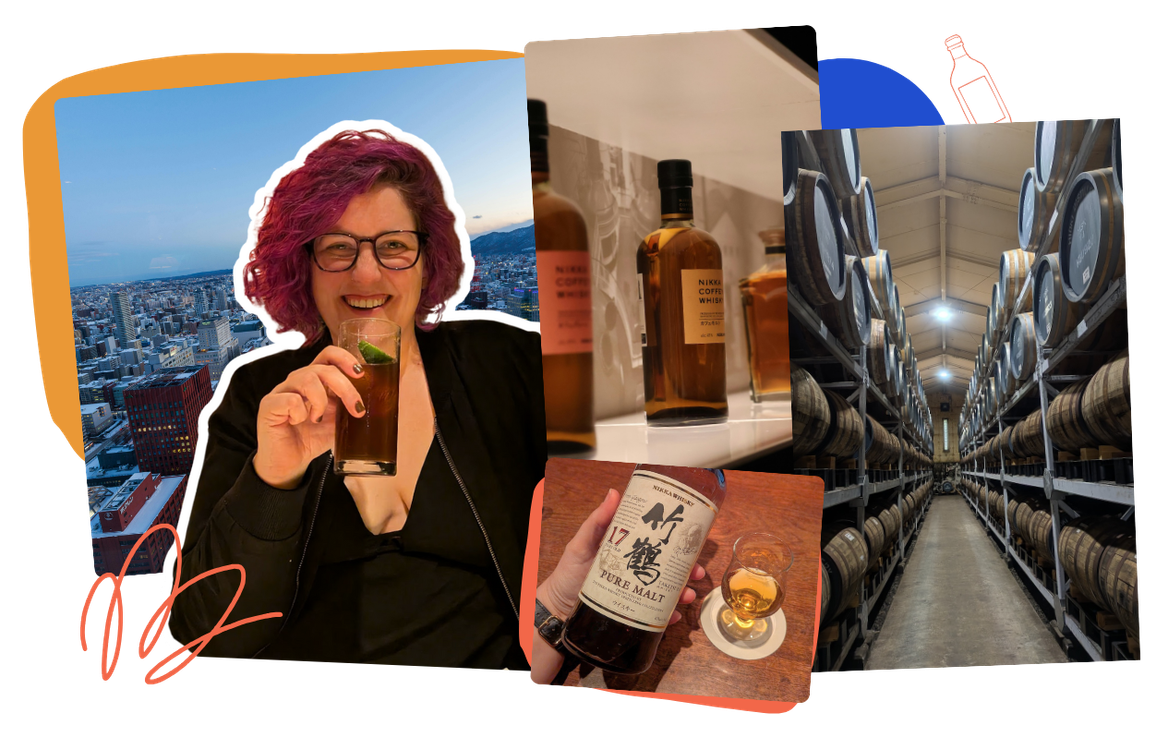
Whisky is a thoroughly Western drink with a six-hundred-year history. And yet, Japan, which has only been making it for a hundred years, is world-renowned for its whisky.
In this episode, we're traveling to Hokkaido, where the grandfather of Japanese whisky set up one of the first distilleries in the country.
Inspired by Scotch, yet uniquely Japanese, Nikka has gained worldwide fame for its exceptional flavor and quality.
So, whether you’re already a big fan or have just always been curious, this episode is for you!
Japanese Whisky
Listen to this episode to hear all about:
- The fascinating origin story of whisky in Japan - and the "grandfather" that made it all possible
- How Japan has preserved traditional whisky-making techniques that have been lost in the West
- What age statements are, and whether they really matter
- How the distillery location (and local climate) plays a role in aging
- And how to navigate an intimidating category to find a whisky you'll like!
Subscribe
Subscribe to the show in your favorite podcast player to make sure you never miss an episode.
And maybe leave a rating/review while you're there? 🙏
More from this episode
Transcript
Welcome to Between Drinks, a podcast where we travel the world one drink at a time.
I’m your host, Caro Griffin, a mezcal sommelier, traveling bartender, and all-around drinks nerd.
In each episode, I’ll take you somewhere new to dive into a local drink with a story to tell. We’ll talk about its history and how it’s made, but also its connection to the place and the people that make it what it is.
There’s a great story behind every great drink, and I can’t wait to share them with you.
When I started telling people I was doing a season about the drinks of Japan, literally everyone started talking about whisky—how much they liked it, their favorite brands… it was everyone’s first thought.
Which is interesting because… It’s not the oldest drink in Japan (that’s sake), or the most popular (that would be shochu). And whisky itself isn’t even Japanese.
Whisky is a thoroughly Western drink with a six-hundred-year history. And yet, Japan, which has only been in the game for about a hundred years, is mentioned in the same breath as places like Scotland, Ireland, and the US as one of the biggest and most respected producers in the world.
In fact, they’re the only place outside the quote-unquote Western world that has a place on this list.
But Japan is also renowned for its craftsmanship… so is it just that? Or is it something more?
Up until this point, we’ve been focused on more historical beverages like sake and shochu, and what they tell us about an older Japan.
Whisky, though, came to Japan at an interesting time and, to me, really represents the more recent chapters of Japanese history.
So, let’s talk about why….
Naoki: If you ask our people in production… They’d be like, “Oh no, we do it the Scotch way.”
Of course, there’s been innovation, but we keep true to traditions. For example, like the direct coal-fired distillation at the Yoichi distillery. It’s something that’s been lost in Scotland, but we somehow kept it.
It’s pretty much the exact culture that was there in Scotland, but 1920s. So, imagine bringing a culture from one land to the other side of the world, give it about 100 years, and see what happens.
At the beginning, you’re going to see something very similar, just the same thing done in a different land. But you give it 100 years, and it’s going to evolve in different paths. And that’s what we’re seeing today, and I think that’s the uniqueness of our category.
Whisky’s Arrival in Japan
Whiskey is a classic spirit for a reason.
Depending on who you ask, it originated in Scotland or Ireland, where people have been making it for around six hundred years. But Japanese whisky starts considerably later, with a US Navy commander and a Japanese sake brewer.
You see, in the mid-1800s, Japan underwent a lot of changes.
Prior to this point, the country followed a strict isolationist policy, which severely limited foreign trade, banned almost all foreigners from entering the country, and prohibited Japanese people from leaving. It was a largely self-sufficient country—they were an agricultural society, with a strong class system, and a feudal military government.
And then came US Navy Commodore Matthew C. Perry and his gunboat diplomacy. He arrived in 1853, determined to open the country to Western influences. And, with him, came whisky.
At first, it was mostly reserved for the upper class, but it had to be imported from halfway across the world, and so it was very expensive.
Early attempts to make whisky locally were pretty rudimentary, and definitely looked nothing like what we know today to be “Japanese whisky.”
This all changed in the 1920s, thanks to the man known as the grandfather of Japanese whisky.
The history of most spirits, or categories of spirits, is usually filled with guesswork. But Japanese whisky is only a hundred years old, and it has such a clean origin story. And maybe that’s why it’s persevered—it’s a good one, and it’s an easy one to remember.
Rarely do you get such a clean, storybook beginning to a spirit!
Masataka Taketsuru was the son of sake brewers who studied brewing and was sent to Scotland by his employers to learn about distilling spirits. He spent a couple of years studying in Glasgow, where he worked at a few distilleries and eventually met and married a Scottish woman named Rita.
Unfortunately, by the time he got back to Japan, his employer was no longer able to invest in whisky production, and so he co-founded a new company. This one with a man named Shinjiro Torii.
This company eventually became Suntory.
Together, these two men built a distillery outside of Kyoto and got to work on their first batch of local whisky. Led by Masataka’s love of Scottish whisky, it proved to be way too intense for the local market, so he and Shinjiro eventually parted ways based on creative differences.
And, so, Masataka founded his own brand, which today we know as Nikka.
Nikka’s History
Naoki: Masataka Taketsuru had what he wanted in his mind. He had a vision. Therefore, he was finding the right place to make that happen. For example, Yoichi, he wanted.. he was looking for a land that was near the ocean because he wanted to create that peaty style.
Obviously, back in the days, Yoichi is from 1934, you don’t have practical logistic solutions yet. So he needed to find peat in Hokkaido, and he did. He needed to find wood for casks, which he did in Hokkaido—very popular Mizunara, which was our primary wood back in the days. And a clean water source and temperature—annual temperature like day, night. Something very similar to Scotland.
So those are some of the factors that he was looking for. That’s how he chose the place, and that’s how everything comes together in the flavor profile.
Now, there were strategic reasons for building the Suntory distillery in Yamazaki. Its water source and microclimate were ideal for whisky making, but it was also very close to two big markets (Kyoto and Osaka).
So, Masataka surely raised some eyebrows when he chose a spot in Hokkaido to build his distillery.
Hokkaido is the northernmost part of Japan, so it wasn’t exactly convenient. But it was also, he later said, the closest place he could find to Scotland in Japan.
And, so, build a distillery he did.
Naoki: And that was the idea because he was looking for slower maturation. So, [with a] lower temperature, maturation happened slower. And then also if you have more moisture, then it also slows down the process.
If you’re just looking for adding flavors, then just create more contact with wood. And create more temperature gap between night and day. And you’ll add flavors, but the magical part of whisky, which we believe in, is the filtration that still hasn’t been figured out.
So, it’s not just about adding flavors with cask, but it’s also about letting nature do its thing to pull out the flavors that we don’t want in there.
Kind of like filtration. And casks naturally do that, but they do it very slowly over time. And that is why we believe slower maturation allows you to keep the liquid while that filtration is happening slowly. And Masataka Taketsuru believed that was his ideal way of maturation. Therefore, he was looking for a cooler climate or a moist, foggy climate.
Masataka went on to not only build the Yoichi distillery in Hokkaido in 1934, but also another one in 1969. That one was in Miyagikyo, in the mountains of Sendai, which is further south… but still pretty north.
Naoki: He’s one of the luckiest men in the whisky world. You’re lucky to build one distillery.
Caro: And to build two for Nikka… and then the original Suntory one too, that’s…
Naoki: And all successful ones.
Caro: Yeah, and the impact it’s had on whisky in general, but also in Japan specifically, too, and the whole world, really. Very lucky man…
Nikka makes a peaty, or smoky, bold whisky at the Yoichi distillery. Whereas the Miyagikyo distillery is known for a more fruity, aromatic style.
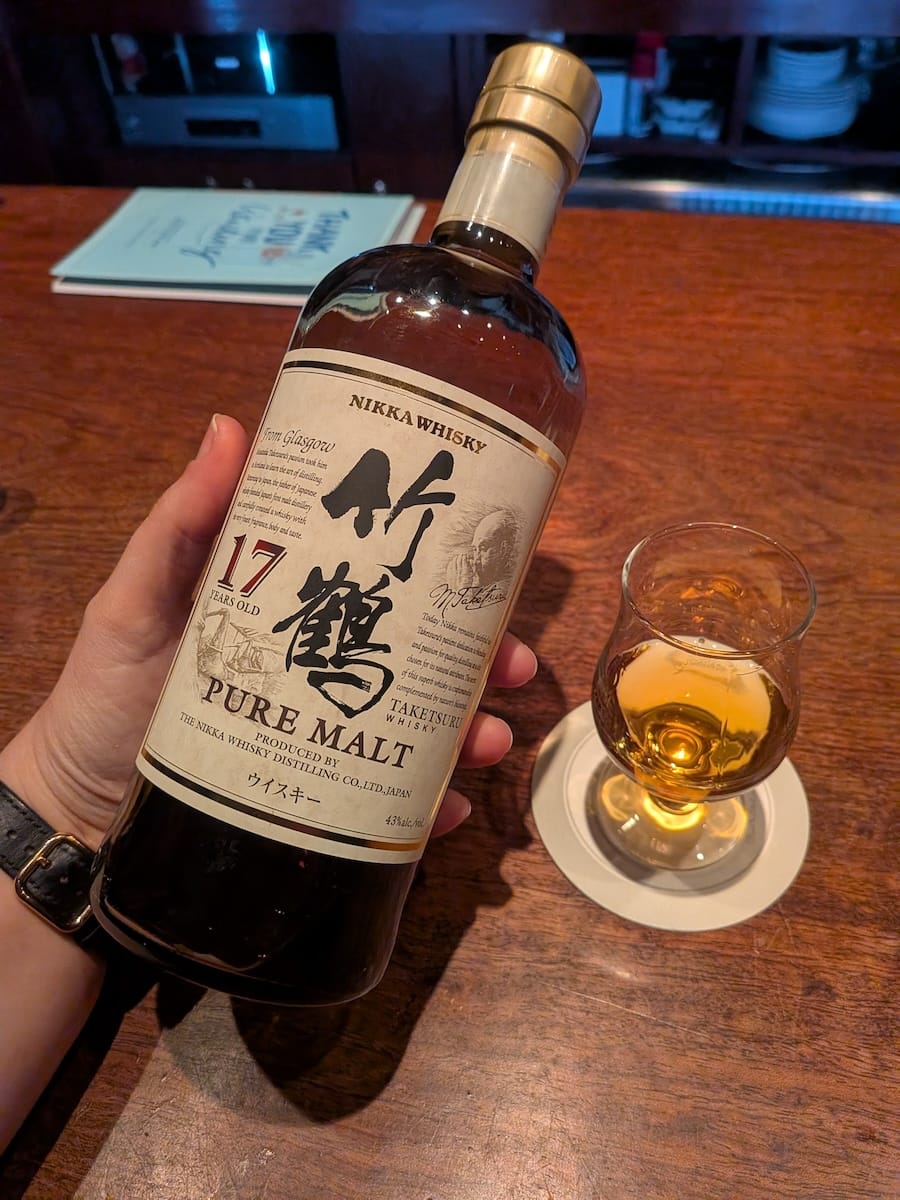
You can buy these whiskies bottled individually - they’ll say Yoichi or Miyagikyo right on the bottle. Or, you can buy a blend of both, named Taketsuru, which is named after Masataka Taketsuru himself.
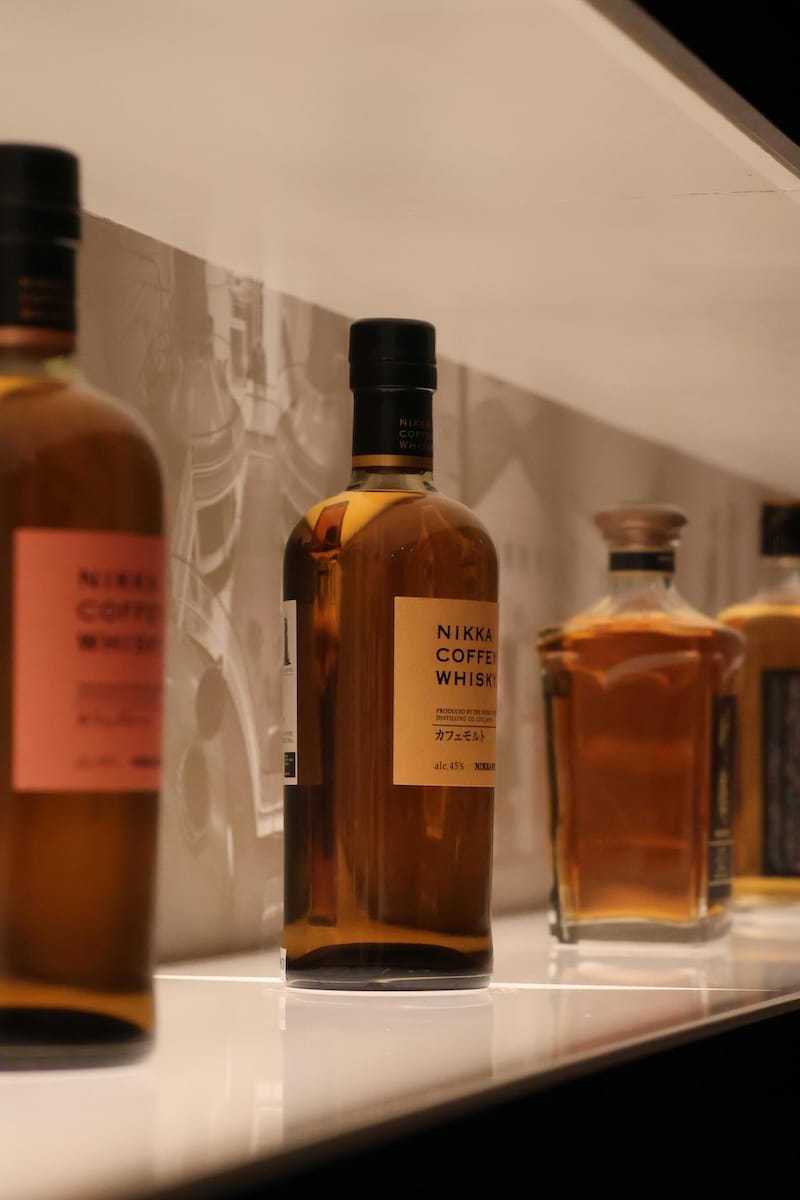
Naoki: Then we have the grains, which is the Coffey grain and the Coffey malt. We call it the Coffey range.
So, these are all distilled in Coffey stills, which used to be very unique. Well, it was “the” still back in the days. But, yeah, nobody was crazy enough like Masataka Taketsuru to install one in like the last century. It’s a very old design.
Now, a lot of producers, or a few producers, are installing the Coffey style, continuous stills in their distilleries, because… I believe we’ve proved, you know, why Masataka Taketsuru bought this particular type of still… like many years, like even more than a century after its invention. Where there were other options out there. It’s almost like, yeah, everybody’s using microwave, but let’s cook. [Laughs]
Well, we do other, we do the microwaves also. So, we do have respect towards that. But, uh, yeah, that’s the grain. Then you mix the malt and the grain, basically you get something like From the Barrel, which is blended whisky.
Blended whisky gets a bad wrap as a cheaper, or inferior, product… and that’s bullshit.
Blended whisky is the original whisky - back when grocers blended their own whiskeys for customers on site. It’s only been in the last fifty or sixty years that single malt—meaning whisky from a single distillery—became more popular, and more quote-unquote premium.
The blended whisky that Naoki is referring to, which is called “From the Barrel,” is one of my personal favorites. It’s bolder than most blended whiskies, but still easy to drink. And its square, squat bottle and simple label do lend a sort of premium air to it.
Naoki: It looks kind of new, doesn’t it? Modern and everything, but we’re celebrating its 40th... Just slightly younger than me. [Both laughing]
Caro: I would have guessed there had been like a rebranding at some point because it does feel so much like a modern bottle, but I also wouldn’t have guessed 40 years old.
Naoki: Yeah, it’s pretty much in that same shape.
Caro: Well, that just goes to show style comes back around…
Naoki: Uh-huh. It’s a timeless design.
Naoki: I think that product really shows Nikka.. Like, it doesn’t look Japanese at all. Like, there’s no Japanese like big symbols. It’s not shouting Japanese… but there’s something Japanese about it that you kind of understand, but you can’t explain why.
I think that’s a good representation of the Nikka personality.
What is Japanese Whisky though?
When whisky lovers refer to “Japanese whisky,” the meaning is obvious… but as a category, it’s actually kind of nebulous.
You see, some spirits, like scotch or tequila, have a Geographic Indication, or GI, which is a set of rules about how and where something can be made.
It protects the consumer from buying something they think is one thing, but really is a cheap imitation. And it ensures that the people and places that make a drink what it is are the ones who benefit from it.
It’s like how champagne can only be made in Champagne, and everything else is sparkling wine, even if it’s made exactly the same way.
Whisky made in the British Isles has a similar set of GIs—Scottish, Irish, English, and even Welsh whisky, all have their own. And American whisky, too, has a strict set of rules governing what you can call Bourbon, Tennessee Whisky, etc.
But Japanese whisky doesn’t have the same thing yet.
You see, in the 2010s, Japanese whisky was suuuper hot. Business was booming, and due to the nature of whisky being an aged spirit, producers had a hard time keeping up with demand. I mean, they couldn’t just drum up thousands more barrels of 12-year-old whisky.
This drove up prices, and some people started exploiting loose regulations to import bulk whisky from other countries, blend it locally, and then sell it labeled as "Japanese whisky."
This was obviously misleading at best, but it also flooded the international market with subpar whisky that damaged the reputation of Japanese whisky overall. Especially because prices had risen across the category at the same time.
There are some voluntary standards that all the big, respectable producers like Nikka now abide by.
These were largely influenced by the rules that govern scotch, and they require that:
- For one, distillation, aging, and bottling—all of that must occur entirely in Japan. No more importing whisky from elsewhere and calling it Japanese just because you blended it there.
- And then there’s also some extra fine print about aging and additives and ABV that we won’t get into.
But, while this answers the technical question of “what is Japanese whisky?” … It also doesn’t really explain the love and the hype.
Like, what defines the style of Japanese whisky? Why is it so popular? So special?
Naoki: A lot of the companies in Japan have different backgrounds. So, there’s no one type of Japanese whisky.
For example, Suntory, Nikka… these two companies are based from Masataka Taketsuru’s studies in Scotland. Whereas, there are other companies who’ve learned from other companies from other parts of the world. So, that sort of comes all together as a category as Japanese whisky just by the geographical explanation.
The category is, I think, known for its precision, quality, as you mentioned…. But every producer has a different philosophy. It’s almost like, to me, all Japanese cars have something in common, like quality-wise, style, I don’t know, like, yeah, there’s something in common. But if you ask somebody, you know, I bought a Japanese car, you’re like, yeah, which brand? Then, “Oh, I bought a Toyota.” Yeah, but there’s so many models. Which one?
And that level of differentiation is what we’re seeing with different producers.
There’s this tendency to paint Japan with this… idealistic brush, as if obviously everything they do is amazing. Like, everyone in Japan is part of this singular, perfect monolith that can only create high-quality things... And it’s bullshit! [Laughs]
Japan is a real place, with real problems, but also, yes, its own specialness. And sometimes I think that gets brushed away with an “of course,” like they’re the high-achieving student that doesn’t get a gold star anymore because they’ve had too many A’s… but the long string of A’s doesn’t negate all the nights they spent studying, all the time and effort.
It doesn’t mean it comes easy. It means they work at it.
And it's here where I’m going to bring up a quote from Yonezawa-san, the master Toji I interviewed in the sake episode. When talking about his work at Akashi, he said, “I try to try every day.”
I think about this a lot because, to me, it’s what embodies this sense of kaizen.
Kaizen is a Japanese concept that is all about making small, incremental improvements continuously over time. Instead of just making big, sexy, sweeping changes occasionally, you rely on these tiny improvements to add up, and this leads to a significantly better result.
And this relates to some other Japanese concepts of monozukuri, or craftsmanship, and even wa, or harmony.
I think all these things are subtly at play in the category, and part of what makes it special.
Does this mean every Japanese whisky is this super high-quality, perfectly made spirit? Again, no. Japan is not a monolith, and neither is its whisky.
But when I look at the good stuff? Yeah. That’s the common thread I see running through Japanese whisky and local drinks in general.
And then the best brands still bring their own take, or flair, to the category.
Naoki: I think we’re one of the most unique ones out there, personally, not just because I work for Nikka. [Laughs]
Two reasons…. Because of our founder, Masataka Taketsuru, it sort of allows us to look beyond and explore new ways of producing, because that’s what he did. And it also… because of his personality, of traveling all the way to Scotland alone, coming home with a Scottish wife and everything. It’s very international. [It was] 1920.
It almost allows us to be not only Japanese. I understand Japanese producers, companies from Japan, being Japanese. That’s totally fine. But whisky is a Western drink. It’s based on Western cultures as well. And that I think our founder really understood that. So Nikka’s way of things, which is slightly different in my opinion from other producers from Japan, is that we really try to live that culture of whisky and not just, yeah, here’s your Japanese whisky.
Age Statements
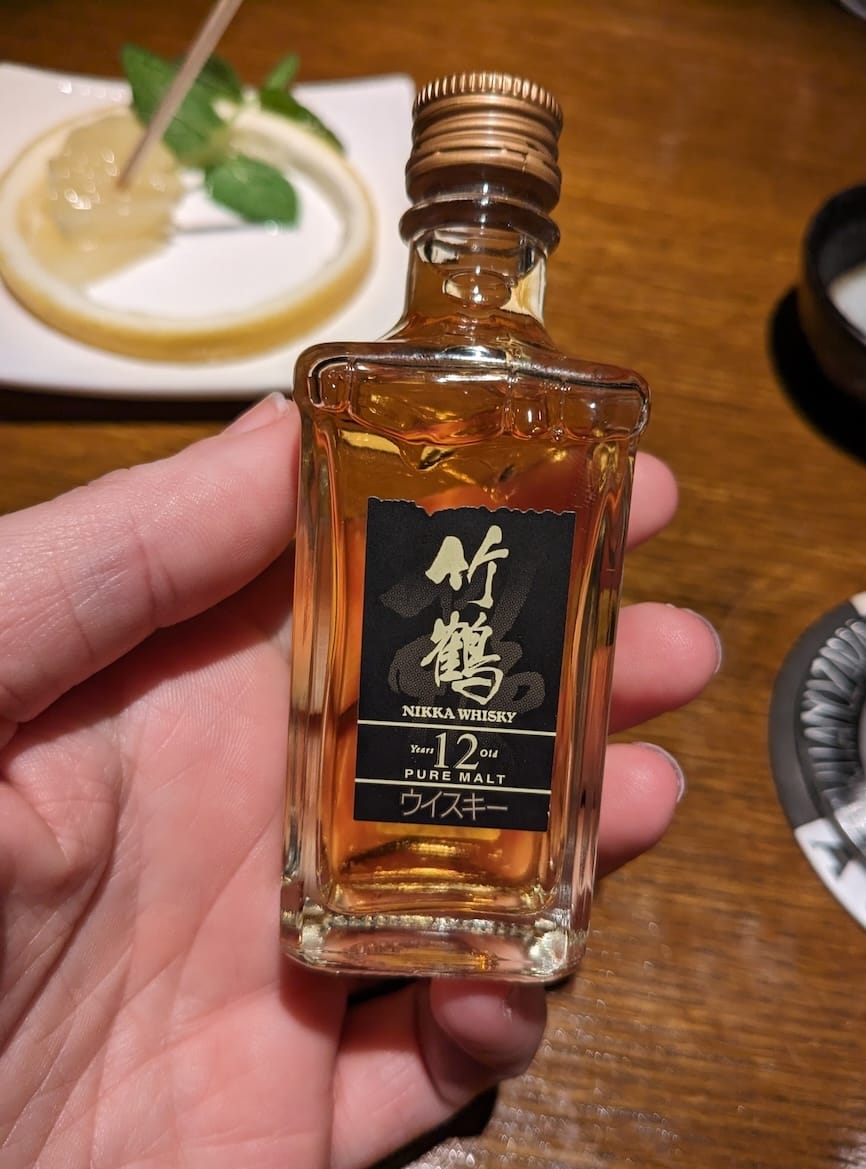
Another thing that comes up often when talking about Japanese whisky is age statements, or the number on the label that tells you how old the whisky is.
Age statements are a thing with all whisky and, more or less, all aged spirits in general. But they come up with Japanese whisky a lot because local brands largely stopped using them during or after the whisky boom I mentioned.
This allowed brands to release bottles with younger whisky that peaked early, preserving older casks for future blends while keeping bottles on the shelf.
Fans say this has shifted the focus from arbitrary numbers to focus on actual flavor profiles, while haters say that it just allows brands to sell younger whisky at more premium prices.
Naoki: As a whisky producer, I believe age statements are very interesting. It’s something that an authentic whisky brand should always offer… in my opinion.
However, it doesn’t have that impact as it had before. I believe it’s not… it will never. Because once all the age statements were deleted and discontinued, and not just about Japanese whisky, though, in the Scotch world as well… every producer and consumer, I believe, started understanding and appreciating non-age statements.
So, instead of a vertical line of products, we came to understand a horizontal line of products. And I don’t think that’s going to go away. You’re going to have a horizontal range of products and a little more variances but wider.
I love this optimistic view because I have a lot of mixed feelings about age statements.
Mostly because something that gets overlooked a lot in the conversation is that the number on the label indicates the youngest whisky in the bottle.
So, if it says 12, all the whisky in the bottle was aged for at least 12 years, but there might also be a… I don’t know, a 15-year or 16-year in there, too.
Whereas, a bottle that says 4 could also have a 15 or 16 year old in there, but you’d still have to call it a 4 even if that’s the smallest share in there.
You see where I’m going with this, right?
The whisky world has taught us that the 12 is infinitely better… but is it?
My example is a little reductive because most producers aren’t going to do that. They’re not going to put a 4-year whisky in with a bunch of older whisky precisely for the reason that they’d have to label it as a 4-year and sell it for less.
And I hate the idea that we’re limiting the whisky we end up with because of some arbitrary misconception…. But also…. Age statements are helpful!
Naoki: There needs to be a lot of education, a lot of effort from whisky people towards consumers. Because, uh, first of all, age statements were easy to understand. And that was the go-to icon on the label that sort of made sense for everybody. Gave you an indication. Didn’t always necessarily mean that more age is always the best. But it was an indication.
And now that it’s lost… consumers require a little more knowledge… understanding of, A vs B vs C. Then you’ve got D, E, F. [Laughs]
It’s like, you know, buying your first smartphone. They all look the same! You’ve got the… [cross-talk] Let’s get the pro version!
Bigger number, pro. That’s all you need. That was the attitude before all these non-age statements came out. Now it’s almost like buying a new phone out of nowhere, and you have no idea. No numbers.
You’re going to need help. And, yeah, it’s probably our responsibility as suppliers, as media, to provide that. Because it’s not easy.
I also love this smartphone analogy, and it’s one I’ve stolen, so thanks, Naoki.
I especially like it because it proves this further point that whisky is even worse… because, with a smartphone, you can compare the high-level specs of 14, 15, and 16 and say, Oh, well, I don’t care about an extra megapixel for my camera or whatever. I’ll just go down a model…
But you can’t really do that with whisky unless you buy the bottle and try the damn thing.
So, these days, Nikka has both no-age-statement bottles and a limited amount of ones with age statements. Which is probably a good balance!
Conclusion
Whisky is an old-school drink, but also a timeless one.
The best ones respect tradition, while also embracing innovation. And that’s what this whole season is about… how Japan has singularly managed to do both while making really great drinks.
Japanese whisky, in particular, is a Western beverage that’s been made uniquely Japanese. And that’s what happened to Japan—it was heavily influenced by Western culture, but it didn’t take anything at face value. It put its own unique, Japanese spin on everything to a degree that’s hard to compare with other places.
Japanese whisky has come a long way since Masataka opened his first distillery for Nikka.
Back in the mid-80s, at the height of the first boom, there were around 30 whisky distilleries in Japan. By 2007, there were just 7.
And now, 15 years later? There are over 70.
That exponential jump largely happened between 2022 and 2023, and so, because whisky has to be aged for a minimum of three years, but often longer, many of the new brands haven’t even hit the market yet.
It’s an exciting time for Japanese whisky, in my opinion, because I think we’re going to keep this really classic, delicious, well-made whisky that’s come to define the category… while also starting to see more experimentation.
So, in the next episode, we’ll go back to Kagoshima to dive deeper into a new wave of Japanese whisky. So tune in for that to hear about a fourth-generation shochu producer who started a bit of a trend on Japan’s southwest coast.
And in the meantime, grab yourself a bottle of Nikka and think of me!
Sign Off + Bonus
You can find the show notes for this episode at betweendrinks.co/japanesewhisky. And that’s whisky without the e, because we’re talking about Japan here, folks.
There are links for Nikka, Naoki, and all the things we talked about in this episode.
And, if you’re new to Between Drinks, make sure you also sign up for my newsletter while you’re there. It’s got all the fun stories behind the making of this podcast, plus great drink recs for cities around the world.
You can subscribe at that same link: betweendrinks.co/japanesewhisky. Again, no e in whisky.
Thanks for listening, and I hope to see you for the next episode as we dive further into other Japanese whiskies!
But before we go, I’m going to leave you with one more fun little tidbit that I couldn’t fit into the episode itself…
Naoki: Nowadays, a lot of whisky producers are creating gin because it’s faster, and you get the revenue from the gin, and you take that and produce your whiskies.
When Nikka started, we were doing that with apples… like apple juice, apple wine, apple jam… Because Yoji was famous for its apples. It didn’t necessarily go well. (Laughs) But that is how we started and…
Dai Nippon Kaju is the original name of Nikka. Dai.. NI-ppon… KA-ju… Nikka. It means the Great Japanese Juice Company.
Caro: Ohhh… I have to say, I would kind of love it if you were just still the Great Japanese Juice Company and making whisky, that would be pretty cute…
Naoki: Yes. It’s quite long. [Both laugh]
So, that’s where Nikka comes from, and it’s almost like… well, apples supported Nikka, and we often relate apples to Rita, Masataka’s wife, because Rita supported Masataka. So, apple has a very important place in our heart…
Thanks again for listening. See you next time!
Nikka Whisky Cheatsheet
An overview of the whiskies we talked about in this episode:
- Yoichi Single Malt - A bold, peated whisky made in Hokkaido.
- Miyagikyo Single Malt - A lighter, fruitier whisky made in Miyagikyo.
- Taketsuru Pure Malt - A blend of the single malts above, named after Nikka's founder, Masataka Taketsuru, himself.
- Coffey Grain - Single grain whisky primarily made from corn and distilled in traditional continuous column stills named after the inventor, Aneas Coffey.
- From the Barrel - A high-proof blended whisky that undergoes another round of aging or "marrying" in barrels after its blended, giving it a more mellow flavor.
You can see the full Nikka product line here.
Related Episodes
 Caro Griffin
 Caro Griffin
I've spent +6 months traveling the country, visiting dozens of cities, and collecting hella Google Maps pins. Get all my recs here!

)