Japanese Whisky (Part 2)


Japanese whisky is world-renowned, but the category has long been dominated by just two brands… Enter a few upstarts at stage left. 👀
In this episode, we're traveling to Kagoshima, where a long-time shochu producer is reimagining what Japanese whisky could look like.
This episode is a must-listen for any fans of Japanese whisky. Plus, anyone who’s planning a trip to Japan and looking for a great destination off the usual path.
Japanese Whisky
Listen to this episode to hear all about:
- How I went from sipping whisky in New Orleans to touring a distillery on Japan's southwestern coast
- Why a fourth-generation shochu producer started making whisky to begin with—and why the local council took years to approve the business plan
- How Kagoshima's warm climate impacts the aging process
- And the impact that shochu barrels have on the final flavors
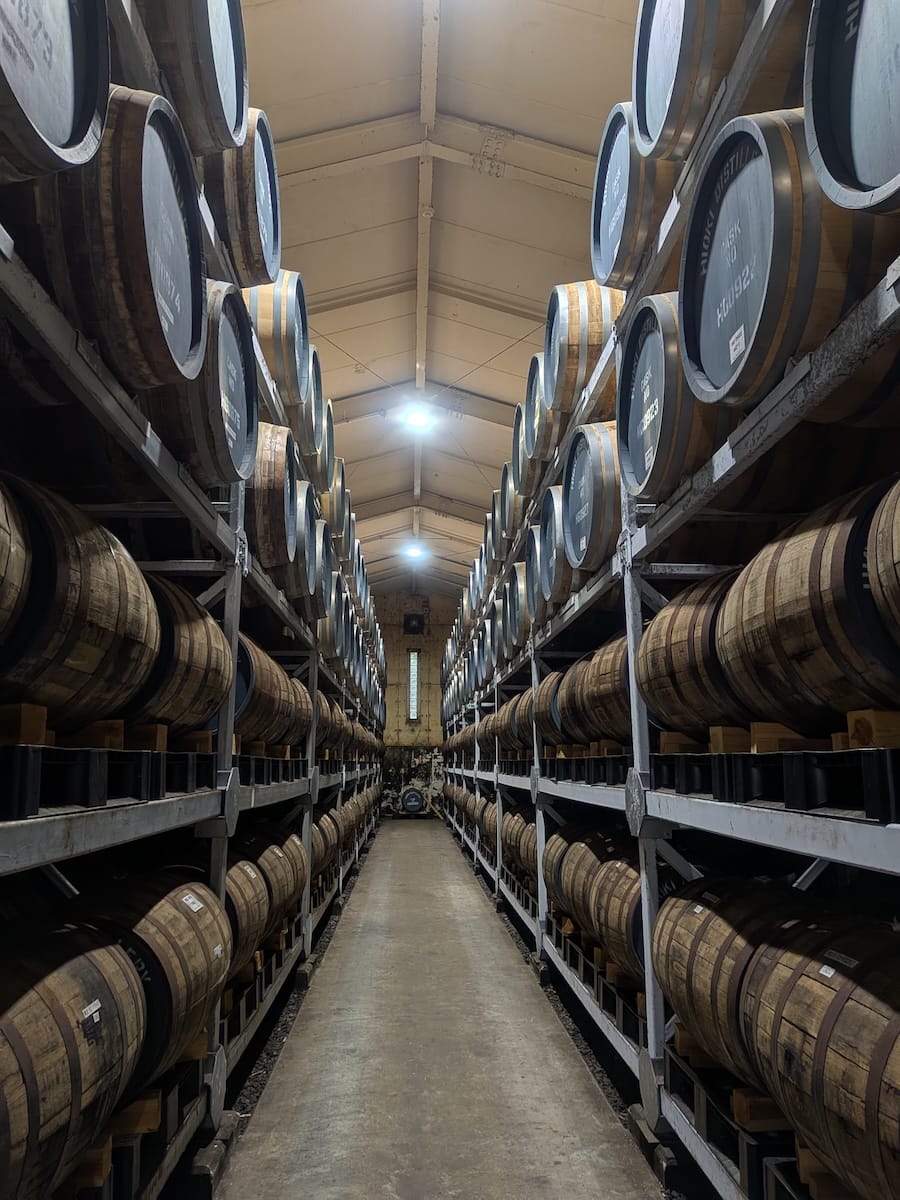
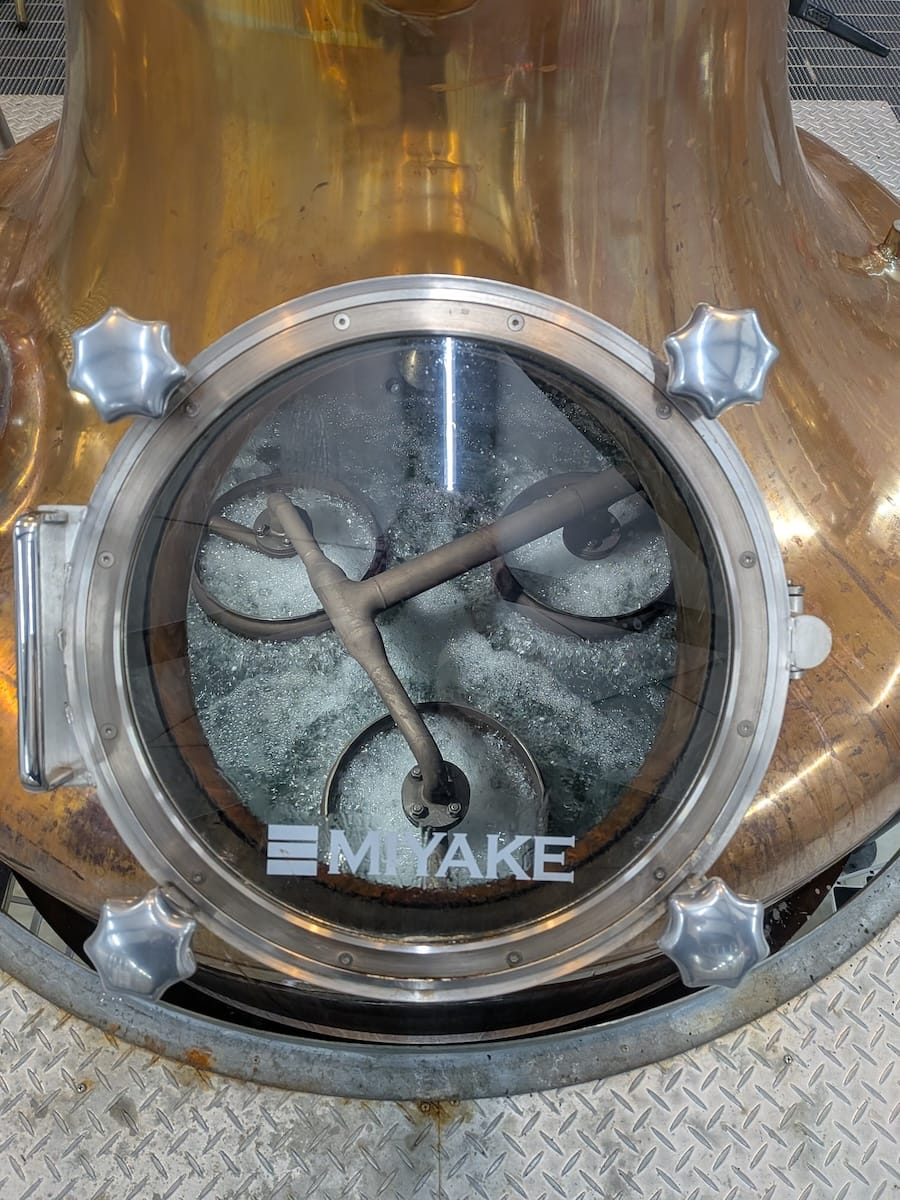
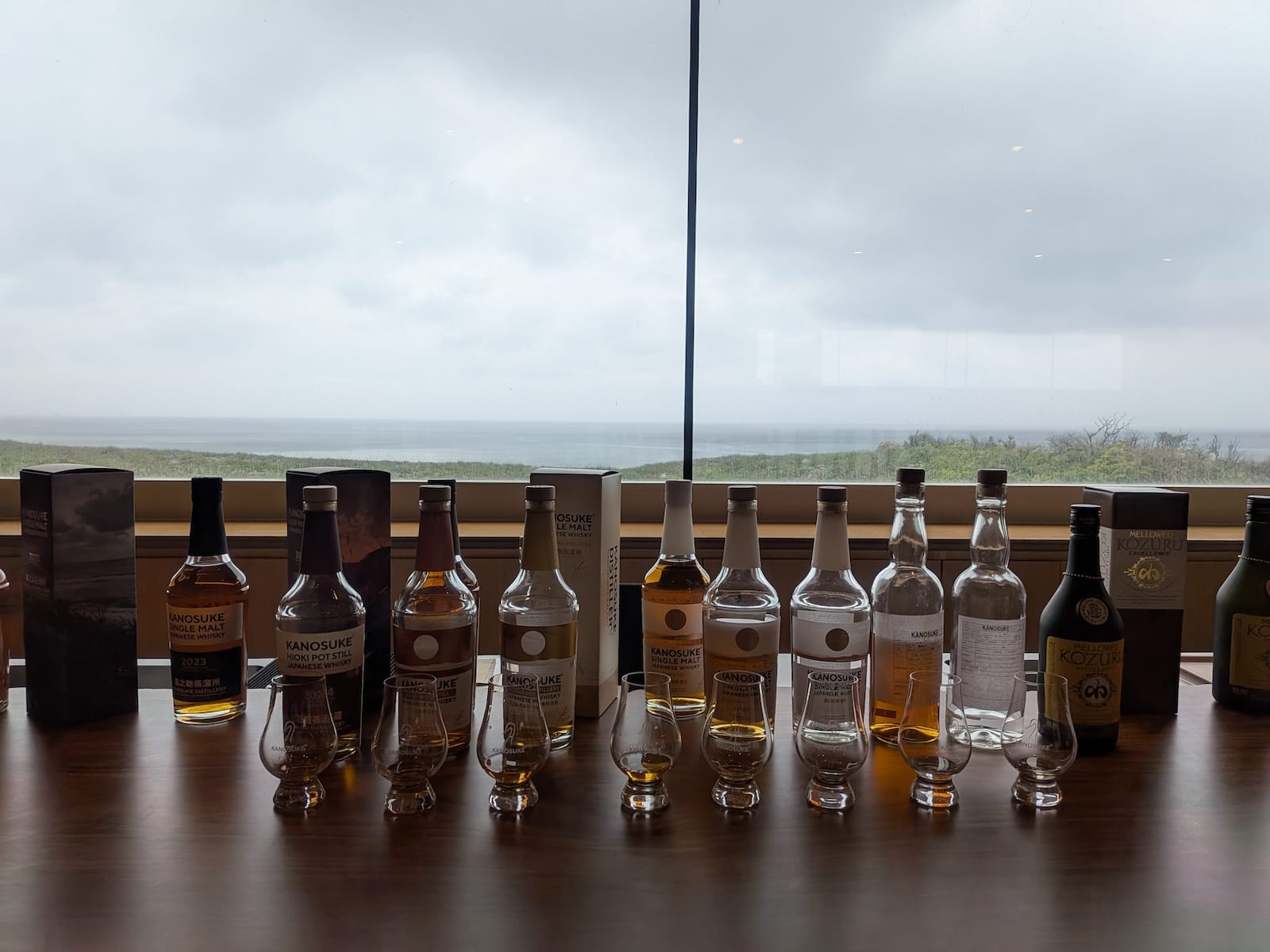
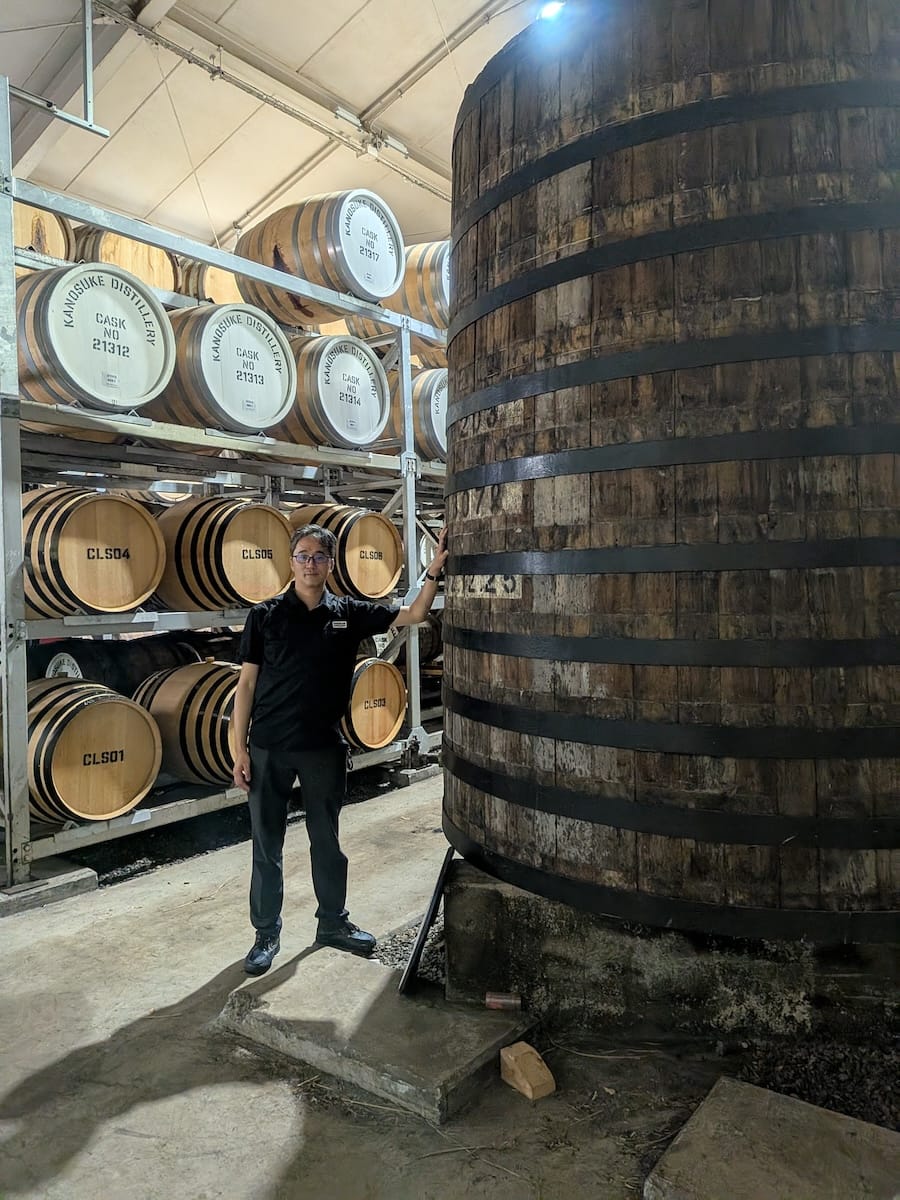
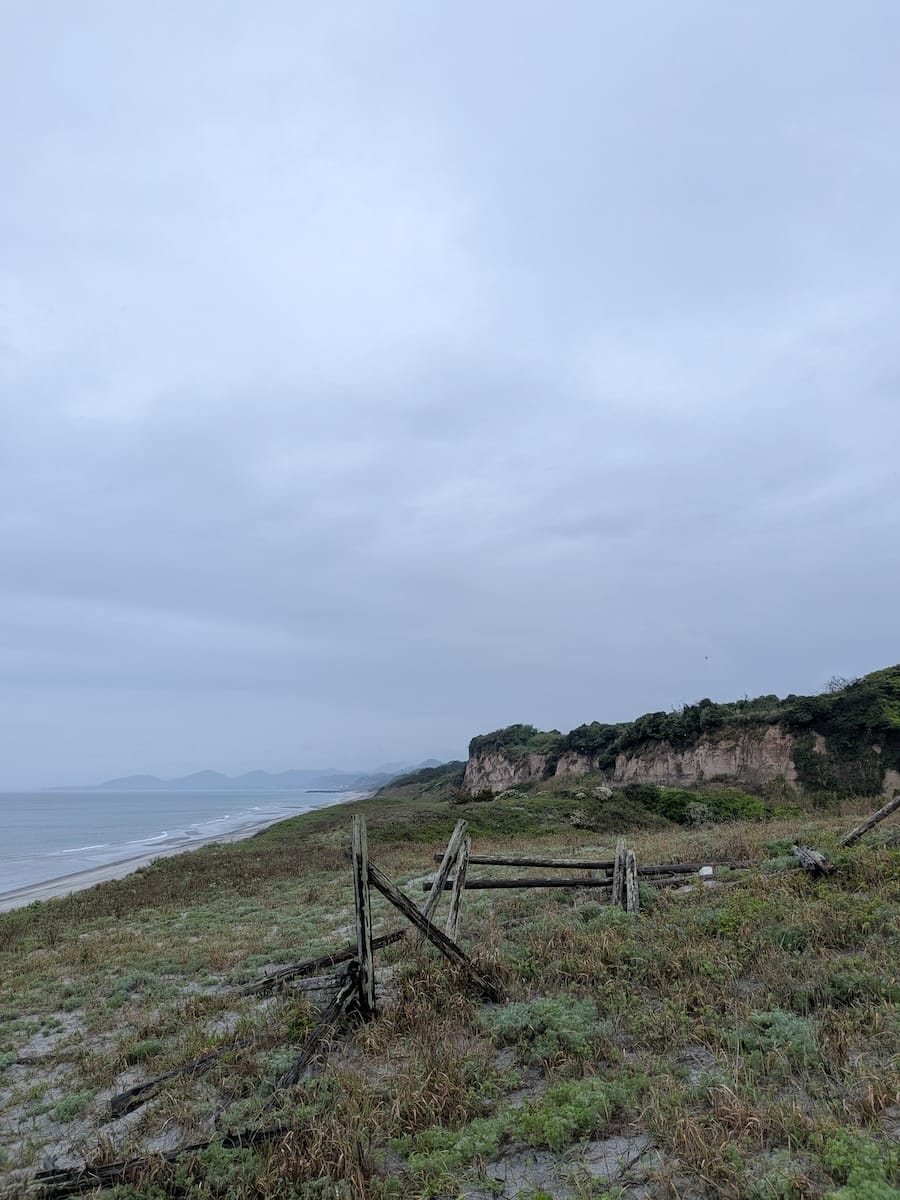
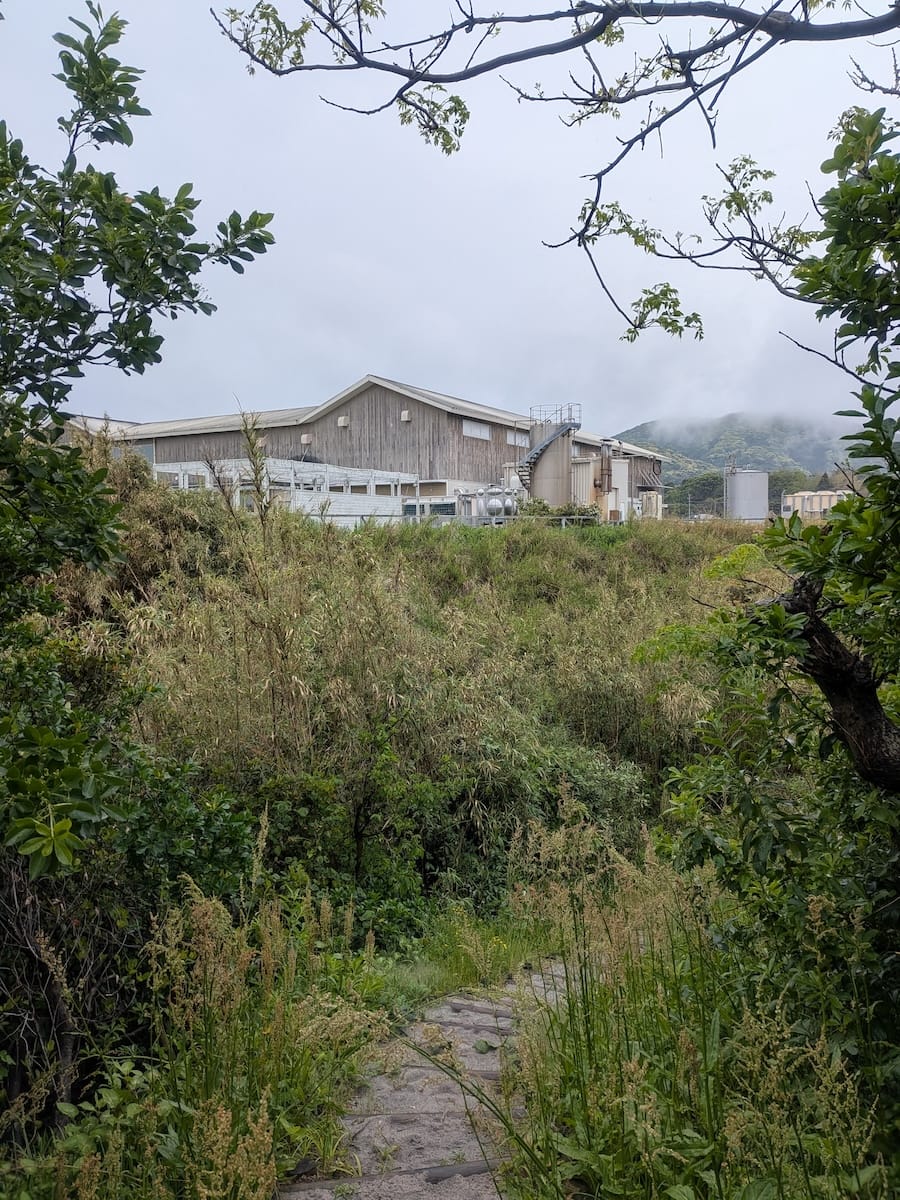
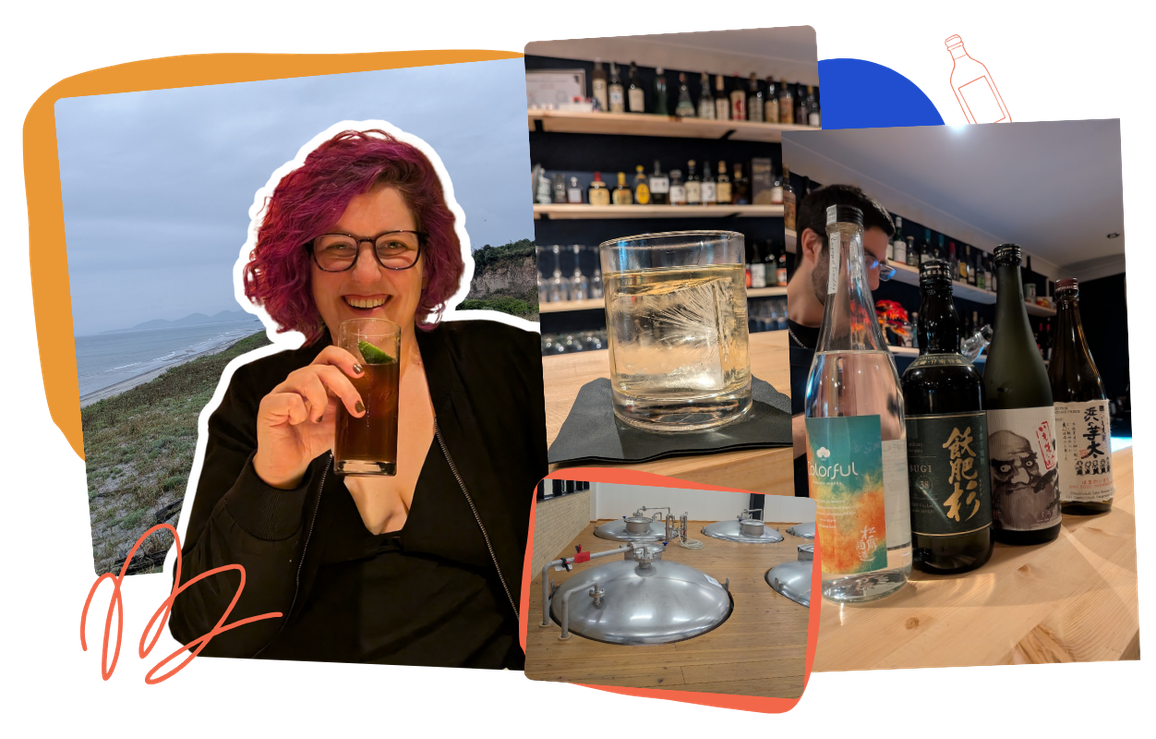
Photos from my visit to the Kanosuke distillery in Kagoshima (© 2026 Between Drinks)
Subscribe
Subscribe to the show in your favorite podcast player to make sure you never miss an episode.
And maybe leave a rating/review while you're there? 🙏
More from this episode
Transcript
00:00 Intro
Welcome to Between Drinks, a podcast where we travel the world one drink at a time.
I’m your host, Caro Griffin, a mezcal sommelier, traveling bartender, and all-around drinks nerd.
In each episode, I’ll take you somewhere new to dive into a local drink with a story to tell. We’ll talk about its history and how it’s made, but also its connection to the place and the people that make it what it is.
There’s a great story behind every great drink, and I can’t wait to share them with you.
00:29 Episode Intro
If you caught the last episode, then you already know a lot about Japanese whisky.
You also know that there’s no unifying style or quality that defines it, other than the place of origin.
And all that variety? It’s about to get even wider.
Up until recently, Japanese whisky was dominated by legacy brands like Nikka and Suntory, which helped create such a strong, global reputation that Japan is now listed in the same breath as countries that have been making it for way longer.
But, for this episode, I want to shift gears a little bit to talk about what comes next.
Specifically, I want to talk about a new wave of whisky producers who have started opening distilleries in Kagoshima, on the southeastern coast.
This area of Japan is known for its shochu, even referred to as the kingdom of shochu, and so that’s where a lot of these distillers first learned to make spirits.
And so, they’re bringing to whisky not only different production techniques, but also different flavor profiles, and they’re reimagining what Japanese whisky can look like.
Because, like I mentioned in the last episode… Japanese whisky hasn’t peaked.
There are now over 70 whisky distilleries in Japan - up from just 7 in 2007.
And, because whisky has to be aged for a minimum of three years, many of those brands haven’t even hit the market yet.
So, if the first hundred years of Japanese whisky were inspired by Scottish whisky, then the next hundred might see a growing subcategory inspired by shochu, in particular.
02:00 Kagoshima Intro
Tats: When you came down to the bullet train, it was quite urban, isn't it? But when you just drive about 20 minutes, you have this rural, mellow land itself. And to be honest, food is lovely, people are nice, and the spirits made here, not just whisky, shochu is… great.
And compared to other Japanese cities, I think this place is very unique. Because there are no other prefectures making so many types of distillates. Because we have 109 distilleries making shochu and 10 whisky distilleries, which is the most in Japan.
We have so many differences compared to other Japanese prefectures. So, I think that we have our own unique beauty. And I'm sure that you don't see volcanoes erupting every day, and not in any other places. So, I think Kagoshima has its beauty.
I think it will be a kind of hidden gem for the tourists to be coming here. So, I hope you will be enjoying your stay in Japan, in Kagoshima, visiting these days.
Caro: Absolutely, I've loved Kagoshima so far. It's been lovely. It does feel very different from other places in Japan.
Kagoshima is a warm, coastal area that’s as far southwest as you can get without actually leaving the mainland. I took the train down and, as soon as I stepped outside, I immediately felt the change.
The city has about 600,000 people, but feels even smaller.
I stayed in a small studio walking distance from the train station, and, so I was dragged my rolly bag down side streets and over train tracks, definitely making the most noise of anyone else on the street because there weren’t many [laughs]. I was struck by how quiet and calm the city really was.
Later, when I ventured out for my mandatory konibini run, I found myself standing outside of my building, taking a look around… and just… not seeing one. No 7-11, no FamilyMart, nothing.
I actually had to pull up Google Maps to find the closest one… which turned out to be 4 blocks away. Not far by any means, don’t get me wrong, but a very different experience from the rest of Japan, where I’m used to walking outside, looking in both directions, and immediately finding one in my line of sight.
This, to me, is Kagoshima in a nutshell. It’s a bit off the beaten path, but it’s still a city. You have to walk 4 blocks for a 7-11… but it’s still only 4 blocks, you know?
I also found that, likely because it’s not inundated with tourists, English was way less common, but people were even more welcoming.
There was this sense of, “Why are you here?”
Not in a rude way but in a way that was like, "We love our home and are happy you’re here… but also somewhat surprised that you see something in it, too.”
At a time when the pushback against tourists is very real in some parts of the world, it's nice to remember that there are plenty of places that do want you there.
Not just because they work a job where their livelihood depends on it, but because they, too, like to meet new people and show off a place they love.
04:58 Kanosuke Origin Story
Tats: So, our company was incorporated in 1883… and Kagoshima is more famous for sweet potato than rice. Because, you know, due to Sakurajima, we have the volcano, and there's volcanic soil.
Volcanic soil is not good for growing rice, so it's more easy for growing sweet potatoes. But we have been using rice for centuries, we have been making rice shochu. And rice shochu was more of a luxurious item because it was very difficult to grow around here.
So that's why… talking about whisky making, we wanted to go for more like a luxurious spirit, not for the bottom shelf. So that will be something different.
And moving on to the second generation, this gentleman is Kanosuke Komasa. He has been to the Pacific wars and travelled around Southeast Asia.
Southeast Asia at the time was ruled by the British, the French, and the Dutch. Therefore, he had the chance to see the Western cultures. And Western cultures include spirits and liquors. Therefore, he has learned that maturing spirit in a cask enhances quality and makes the spirit more mellow.
Therefore, when he came back from Japan, he matured his rice shochu in a cask. And he had it matured for over six years.
And this product became very popular in the 1960s and 1970s. Therefore, he decided to build this distillery. He wanted to promote shochu to the world.
And this dream was succeeded to his grandsons…
Kanosuke is a distillery on the actual coast, not too far from the city itself, in a town called Hiyoki, or ‘where the sun sets.” It was raining when I went, which totally ruined my plans to see their epic sunsets, but it was beautiful even covered in a little rain.
At the first opportunity, I followed the craggly path from the distillery’s back door to the actual shoreline. It was basically what I imagined the Scottish highlands to be… just a little warmer and muggier because of the climate, and almost as green.
I stood there on that cliff, in spitting rain, the shore in front of me, lots of trees at my back, and while I logically knew there were dozens of people in the distillery itself, it was mostly hidden by the trees, and I couldn’t actually see anyone for miles.
It was just one of those moments, you know?
And, to think, I never would have had that moment if I hadn’t gone to a whisky tasting in New Orleans.
07:37 My Intro to Kanosuke
I first tried Kanosuke at a “women in whisky” event last year and was immediately intrigued. Not just because their whisky is great, but because they're doing something new and interesting with it.
Their General Manager, Roland Ng, steered me through a short tasting and told me about their connection to Kagoshima. And, if the quality of the whisky hadn’t sold me, their story definitely would have.
When I mentioned that I was headed back to Japan in the spring, he encouraged me to stop by and, well,... say less, Roland. [Laughs]
Don’t threaten me with a good time! I have gotten on a train for a lot less!
And so, get on the train I did…
I spent the day touring the distillery with Tatsuya Ishihara, or Tats as he’s often known as. He’s the brand ambassador for Kanosuke and a true whisky nerd in the best way. I mean, he has a note on his phone with all the distilleries he’s been to and… y’all, the number of distilleries I’ve been to since where Tats has come up… goals. [Laughs]
But before we talk about Kanosuke and their whisky, we have to first talk a little more about shochu…
08:38 Started with Shochu
Tats: He tried to promote Shochu to the world, take it to many places. Talking about awards, we were able to win many silver, gold… so the result was nice. [Caro laughs]
Trade was difficult because when you go back to your home country… I'm sure when you go to liquor stores, there will be some, okay, wine corners, whiskey corner, tequila corner, mezcal corner, and sake… maybe… but shochu? I'm sure, definitely not.
Caro: Where do you put it? Yeah…
Tats: So, those kind of distribution was very difficult. The quality was okay… But one of the customers said, you can make great distillate, so why don’t you make whiskey?
And so that… so, to promote shochu and to promote Kagoshima, he wanted to make a whiskey that had a shochu idea. And so that was his challenge.
A mile down the road from Kanosuke sits another distillery. It’s called Komasa, after the Komasa family, and they’ve been making shochu for over 400 years.
If you listened to the recent episode on shochu, then you already know all about it!
But, for those of you who skipped it, a little recap—shochu is a distilled spirit made by fermenting crops like barley or sweet potatoes with koji, the same mold used to make sake. (See? Everything’s connected here!)
Kagoshima is the unofficial capital of shochu, and where most producers are based. And Komasa is one of the most established and long-running producers. They’ve been at it for over 400 years!
Suffice to say, they know a lot about making shochu.
Tats: Most Japanese whiskey distilleries… tried to go for Scotch style because Japanese… the father of Japanese whisky, Mr. Masataka Taketsuru, he went to Scotland to learn how to make whisky because it was his dream.
And, also for Suntory, Mr. Shinjiro Torii, he wanted to make a Scotch type. Because… that's why he asked Mr. Masataka Taketsuru to be the first district manager at Yamazaki.
And also talking about the distillery, they wanted to go for the very traditional scotch style. And so, mainly Japanese whiskey distilleries want to go for scotch. But, for us, we wanted to promote shochu and Kagoshima.
Therefore, we didn't just make Scotch style. We also make Irish and Bourbon-style whiskeys. Not just Scotch. Because that is... we want to promote the shochu ideas. So, that's why we call ourselves “Next Generation Japanese Whiskey from Kagoshima’s mellow coast.”
Part of the reason I love this story is that it’s such a sneaky, backdoor way of converting people to shochu… but it’s done with such pure motives.
Everything Kanosuke does is about showing the world shochu, and celebrating Kagoshima, and that’s so evident in their whisky and the way they talk about it.
11:39 License / Ripple Effect
Tats: Basically, here is more like a shochu kingdom. Whisky was considered a spirit that is made in cooler places. Because, you know, Scotland… It’s much cooler, isn't it? So, it was very difficult for shochu people to understand that whisky is possible to make in Kagoshima.
That’s why our CEO, Komasa-san, he went to Scotland to learn how to make whisky. And he had to convince the local government that whisky-making and shochu ideas… we could mix it. So, those things are very difficult. It’s not talking about romantic stuff, okay? It's talking about cash flows.
Whisky takes time. Shochu, after distilling [and] leaving for less than one year, we are able to ship it. Whiskey, takes, at least, minimum three years. So those kind of things was very difficult. And whiskey, we have to be investing a lot.
It is more complicated than shochu, I should say. So, for those things were very difficult to convince. So, that’s why we have to present a thirty-year business plan to… receive the license for… the whiskey making. We have to present it to the local tax office.
Caro: Wow! So, they were just worried about like, losing the taxes from the shochu, if you switched focus to whisky?
Tats: No, of course, no... I believe that the Komasa family has been making shochu for… And Komatsu… [stumbling]
Caro: He’s a big deal.
Tats: Big deal, yes. So, if Komasa goes bankrupt, for instance, by doing the thing that is not suitable for this place... So, they're not just mean; they are caring about Komatsu family. So, both of them have the same kindness and justice. So, that's why it took time. [Laugh]
Caro: That really speaks to the community, though. Where it's like no we care about you, too. You're a big part of this community. We want to make sure that you're here and continue to be a big part of the community.
Tats: Exactly, exactly. Kagoshima people are very kind. And kindness is shown in different ways sometimes, though.
13:50 Shochu Methods
Kanosuke was one of the first whisky distilleries in Kagoshima, and it opened in 2017.
Now, just seven years later, there are 13. That’s more than any other prefecture in Japan—in an area that people thought was ill-suited for making whisky!
Not only did Kanosuke start a trend, but they’re making special whisky that’s a little different from the “Japanese whisky” we normally think of.
Starting with production methods straight from the shochu world:
- They do long fermentations of 120+ hours—much longer than Scotland's typical 2-3 days—in stainless steel vats to block bacteria, just like in shochu.
- They use a blend of yeasts, not just one commercial strain.
- Their distillery has three different stills with different neck shapes and angles, which give them a lot of flexibility in the type of spirit they make and how it’s blended.
- They focus on getting a really clear, primarily unpeated, wort that tastes fresh, fruity, and that’s going to impact the final flavors that come out of the barrel.
- And part of their lineup is aged in casks previously used for their rice shochu.
It was when I tried this particular whisky that comes from the shochu barrel that I had to take a second and be like, “Wow, this is not like anything else I’ve ever tried.”
But, oftentimes, when we say “this is interesting” or unique, it means it’s funky or weird. It’s not something we want to keep drinking in glass after glass… and that is not the case with Kanosuke.
And I think that’s why I love it so much! They manage to straddle that line between “this is interesting” and “this is also crushable.” As much as you want to crush whisky. [Laughs]
It’s super easy to drink, while also being interesting.
15:26 Barrels & Aging
[Warehouse door loudly opens, brief scuffling of footsteps]
Caro: I love the effect of the lights coming on. [Both laugh] Oh, this smells…
Tats: The aroma is totally different in here…
Caro: Totally different and so much stronger… in a great way [Cross-talk]
Tats: Because basically we don’t open shop too much, and so the aroma you get here is more like maple syrup, like a baked cake…
This is our ex-shochu cast. We have been making rice shochu matured in casks.
So, first, we will be buying a 450-liter size. Then we will be filling with rice shochu. Then we will be taking it out. Then we will be filling it with another batch of rice shochu…. So we will keep using it for around 10-years-plus.
Caro: Oh!
Tats: After that, we will be filling it with malt whisky distillate.
That is very different compared to other Japanese whiskey distilleries. Because most whiskey distilleries will not be having this ex-shochu cask.
In Japanese craft whisky distilleries, most of them would be having bourbon barrels, about 80% plus. But for us, since we have about 20 to 30 percent of this cask, and we can use a lot of this when we create a blend. So, that's why that will be giving very different flavors compared to the other Japanese [distillery].
Basically, the flavor you'll be getting is that aroma of koji itself. Koji, for the aroma and flavors, you tend to get Japanese cinnamon notes, which is very unique.
Because, again, no other Japanese whiskey or no other Scotch is using it. So, that's why we have such distinctive flavors. So that will be a very, you know, kind of advantage of us from, you know… since we're making shochu.
That was Tats giving me a tour of the different barrel warehouses at Kanosuke, each of which has its own distinct aroma based on:
- What kind of barrels they’re using,
- And how long those barrels have been in there.
Whisky has to be aged for a minimum of three years, but there’s a… somewhat misconception, somewhat valid belief that the longer you let it age, the better the whisky.
We talked at length in the last episode about how I think age statements in whisky are overrated… and Kanosuke is just another example of why.
Time in a barrel is not apples to apples.
Kagoshima’s climate is warmer, and so its whisky can theoretically mature faster. That doesn’t come without its trade-offs, though.
Tats: Talking about whisky, these climates are very important.
It's quite different compared to Scotch, actually. But what's different is that summertime, it's super hot. As you can imagine, we're in the southern tip of Japan. But wintertime, we have snow.
So this temperature factor actually gives us much more, very fast maturation. Talking about scotch, the angel's share is about 2%. For us, we go for around 6-8%.
So, we lose a lot.
Caro: Wow
Tats: So we pay a lot to the angels, therefore, we get our payback time much faster than them.
Because we believe that scotch, it takes about 10-12 years. For us, so basically, well… it's very difficult to say because we don't have specific data, but when I ask people to drink our whisky without telling them our background, most people will be asking how old this whisky is.
Then, if I'm given that question, I always ask back, “What do you think?” And most people will be answering it's about 8 to 12 years old, but the answer is actually about four years.
Which means that our whisky matures about two to three times faster than scotch.
Climate plays a big role in whisky, so let’s dig a little bit into why.
It’s all about the aging, or maturation, stage. After whisky comes off the still, it’s aged in a barrel—usually one that previously held bourbon, other whisky, even sherry, wine, or, in Kanosuke’s case, even shochu barrels.
It’s this time in the barrel that gives it the color and flavors we often associate with whisky.
Tats mentioned an “angel’s share” - this is a very common whisky term, and a really lovely turn of phrase in my opinion.
It refers to the portion of whisky that evaporates during the aging process, AKA the share that goes to the angels.
When you age whisky in cooler climates like those found in Scotland or Hokkaido, it takes longer to mature, but you only lose about 2% of your whisky, on average.
Kagoshima, on the other hand, has a much warmer climate, and so they lose 3-4x that, but also theoretically, get great whisky much faster.
20:18 Conclusion
The best spirits taste like where they come from, and Kanosuke is an unabashed love letter to Kagoshima.
Right down to the fact that they’re using shochu production techniques to make said whiskey in the quote-unquote “kingdom of shochu.”
They use the phrase “mellow land, mellow whisky” a lot, and that really tracks for me.
If you like an unpeated scotch, a blended whisky, or just a bold, but smooth single malt, then you’re sure to like Kanosuke.
Also, if you ever get the chance, I highly recommend visiting their distillery. There’s nothing like sitting in their quiet Mellow Bar, as they call it, with a panoramic view of the coastline, sipping some great whisky. It’s truly a beautiful space, in a beautiful place.
21:02 Sign Off
You can find the show notes for this episode at betweendrinks.co/mellowwhisky. And there’s no e in whisky, because we’re talking Japan here.
You can find the usual links there - to Kanosuke, their distillery, and their lineup of great whiskies, plus the other stuff we talked about.
And, if you’re new to Between Drinks, make sure you also sign up for my newsletter while you’re there. It’s basically a mini version of this podcast - maybe a little less nerdy, and a few more funny stories about the shenanigans I get into while traveling around making this podcast.
You can subscribe at that same link: betweendrinks.co/mellowwhisky.
For those of you who have tuned into the whole season, thanks for listening! And for joining me on this not-so-little trip to Japan.
This is officially the last episode of the season… but I may have an exciting surprise coming for you soon, so make sure you’re subscribed at that link I mentioned.
In the meantime, cheers!
Related Episodes
 Caro Griffin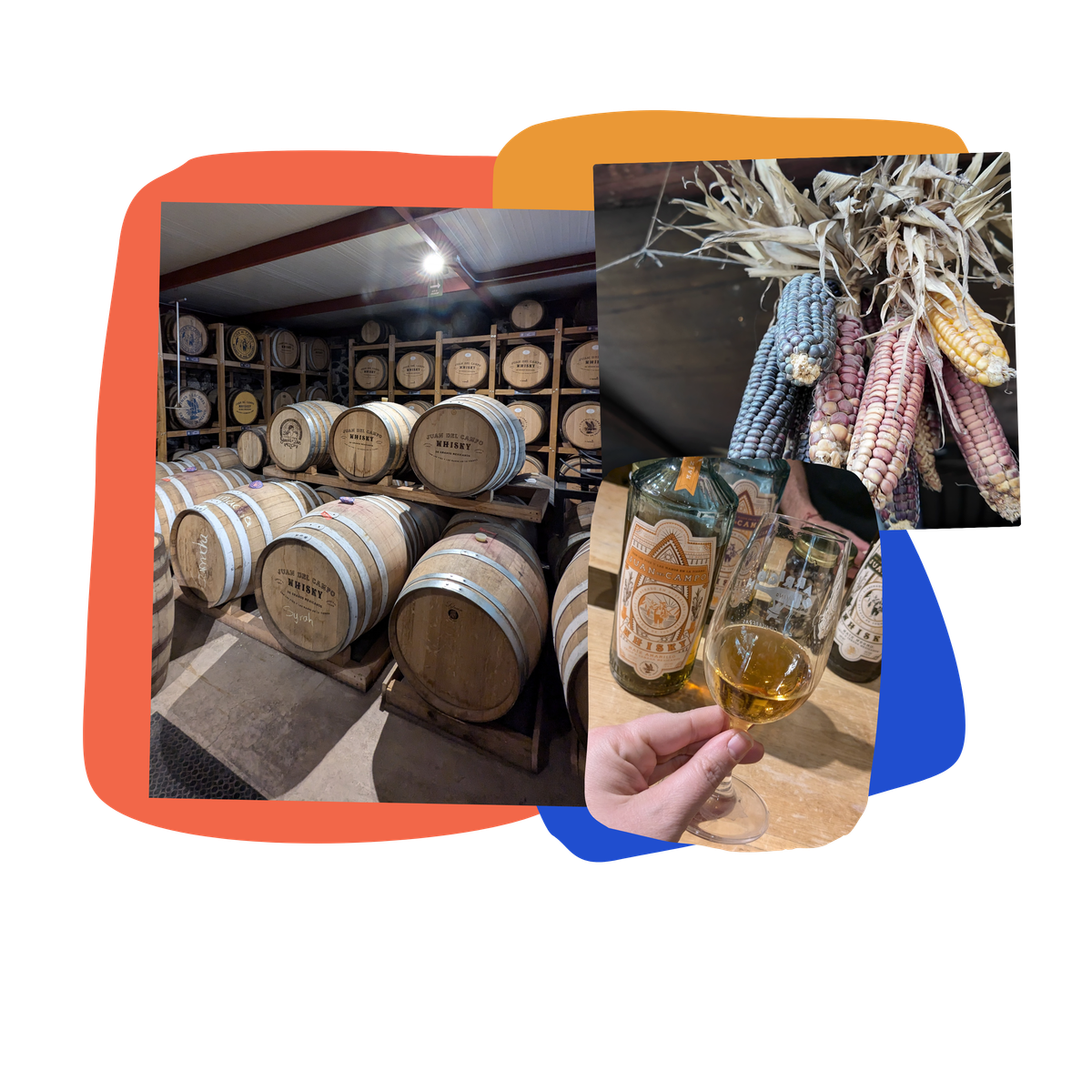
 Caro Griffin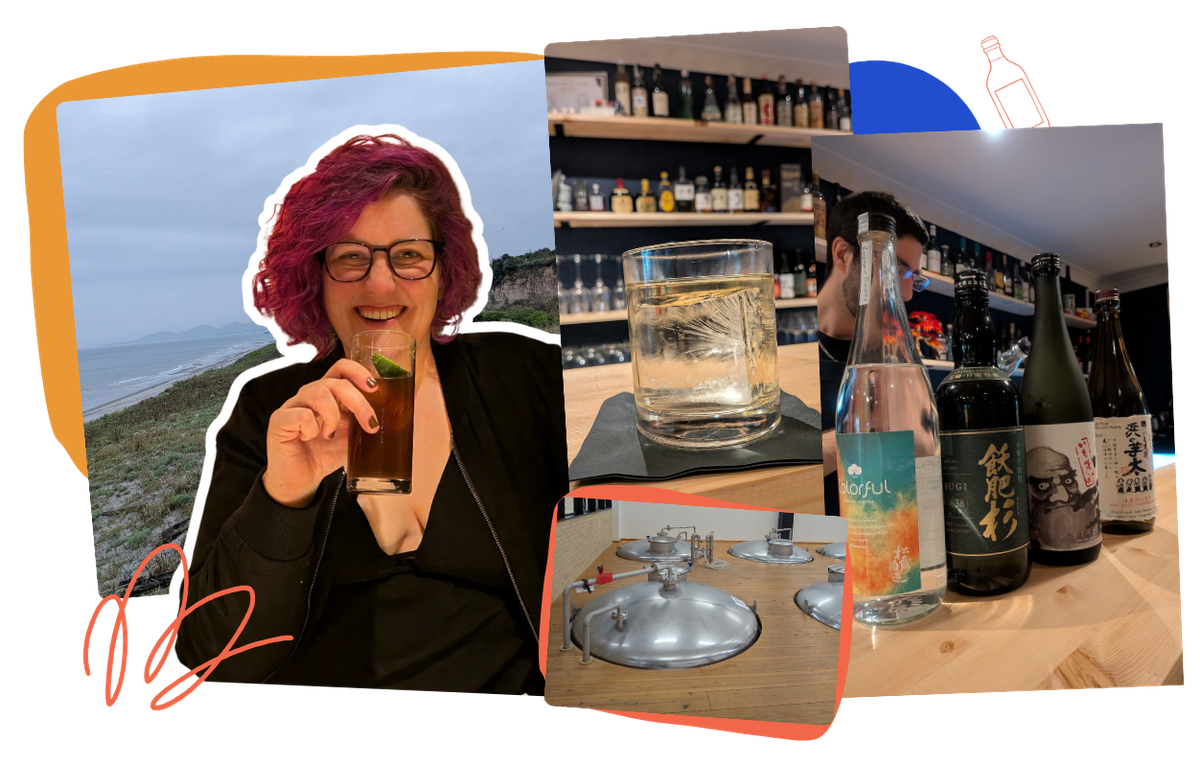
 Caro Griffin
I've spent +6 months traveling the country, visiting dozens of cities, and collecting hella Google Maps pins. Get all my recs here!
)