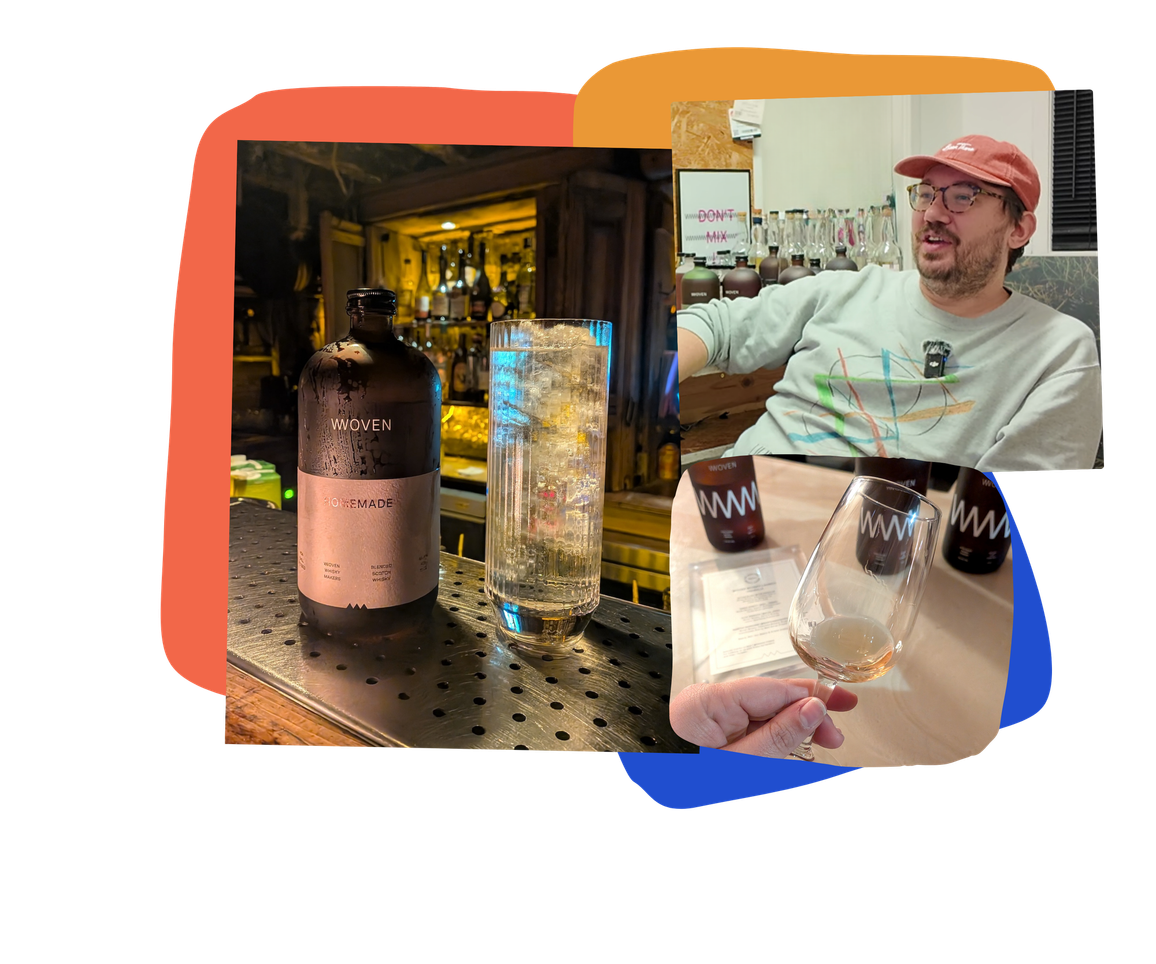
Single Malt Scotch Whisky

Single malt scotch is not the first drink I think of when it comes to terroir.
I'm a mezcal sommelier — terroir is basically the framework I think in — and most whisky distilleries won't even tell you where their barley came from.
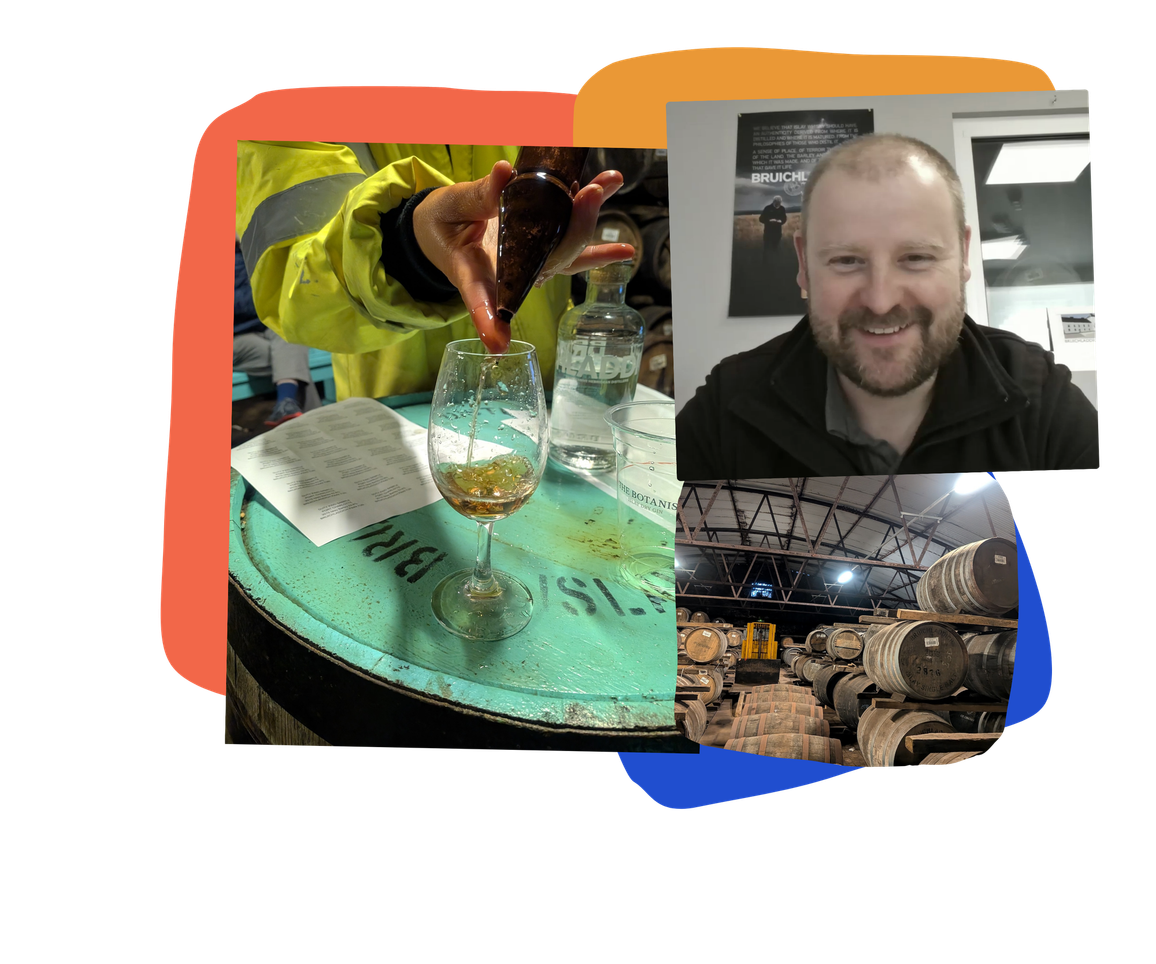
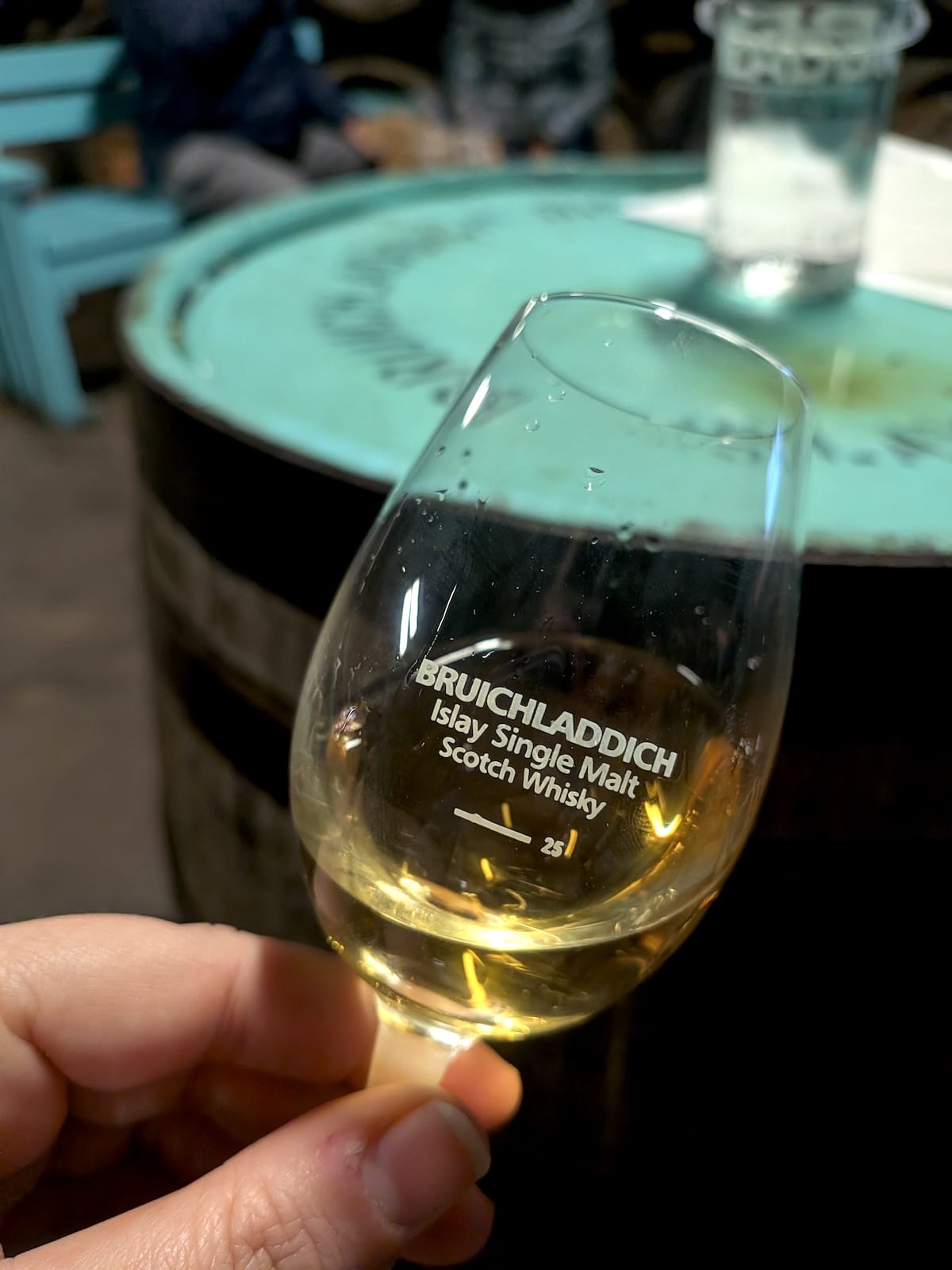
Then I took a ferry, then a bus, then another bus, out to Islay, and I sat down with Adam Hannett, Master Blender at Bruichladdich — the whisky that got me curious about the island in the first place.
We get into peat, patience, twenty named farms on one small island, and why the decisions Adam makes today won't pay off for another decade.
By the end, I was ready to book a very inconvenient ferry back.
Blended Scotch Whisky
Listen to this episode to hear all about:
- What "single malt" actually means
- Why a 3,000-person island has ten whisky distilleries—and how peat, geography, and a few centuries of smuggling built the category
- Why Adam is convinced whisky has terroir, and the twenty named Islay farms he points to as proof
- What it's like running a Victorian distillery almost entirely by hand — Fahrenheit gauges included
- Why Bruichladdich does nearly everything the hard, expensive way, right down to bottling on-island (and why Adam says that's the whole point)
More from this episode
Transcript
Intro
Welcome back to Between Drinks. I'm your host, Caro Griffin - here to share the stories behind your favorite drinks and the people and places who make them what they are.
Last episode, we were in Edinburgh, making the case that blended Scotch whisky is a lot more interesting than its reputation suggests. If you haven't listened to that one yet, go back — it's a good one.
For this episode, we're leaving the city. We're taking a ferry. We’re taking a bus… and then another bus. [Laughs]
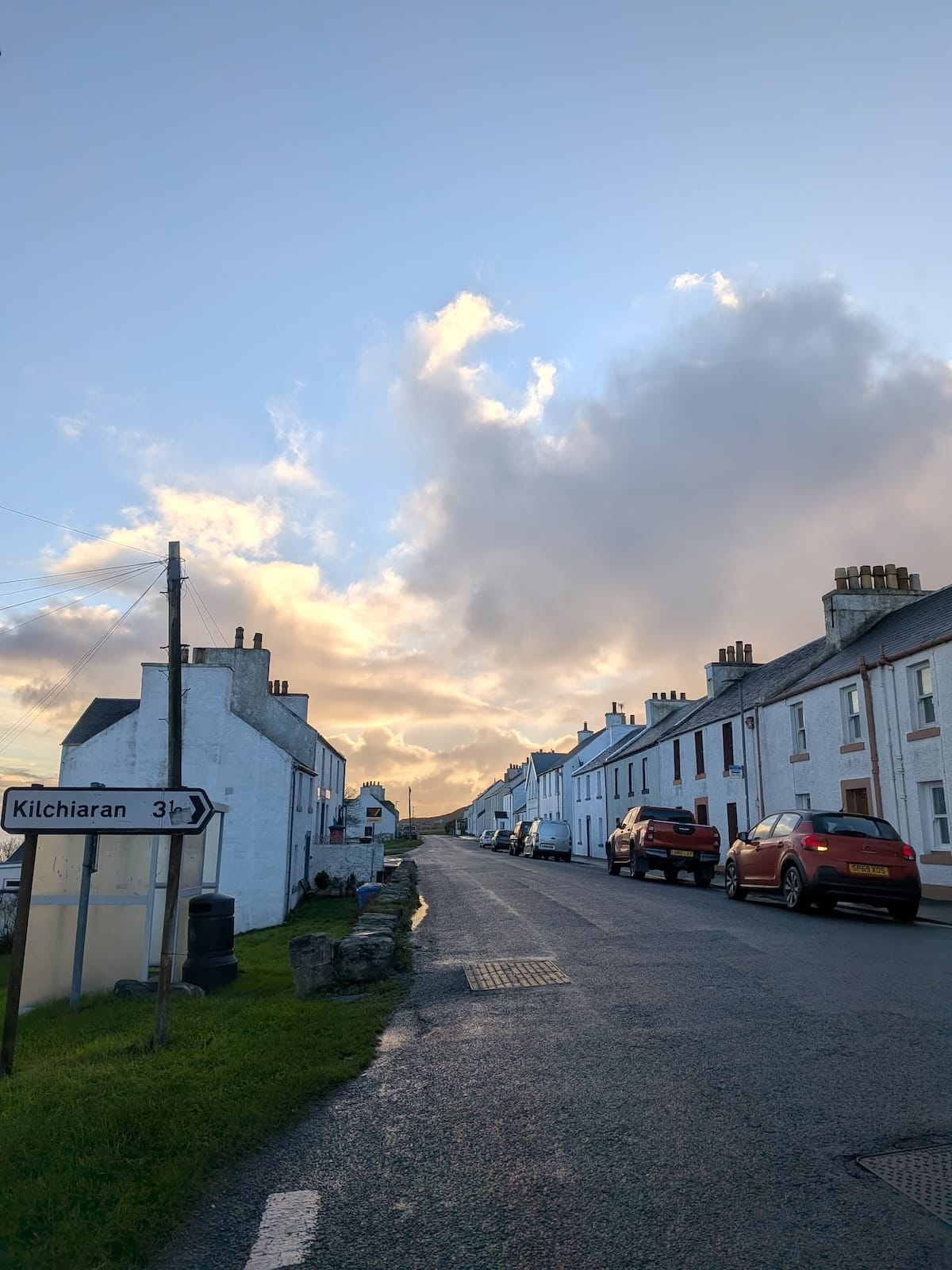
We’re landing on a small island - nine miles off the southwest coast of Scotland. About 3,000 people, a series of increasingly small villages, and a road that loops around the coastline.
Plus: ten whisky distilleries.
This is Islay. And this is single malt.
-
Before we get into the nitty-gritty, a slight detour on the, well, let’s say unexpected pronunciations we find in this corner of the world…
Not long after I started planning this trip, I was talking to someone from Scotland about all the places I was planning to go and getting his recommendations.
When I got to the island, I said: "Ice-lay? Is-lay? I'm not really sure how to pronounce it…” And eventually I mentioned the whisky part, and he goes, "Oh, you mean Islay."
So yeah: even though it's spelled I-S-L-A-Y, Islay is how it's pronounced.
And this is because a lot of the names on Islay — the villages, and even the distilleries — are rooted in Gaelic. So pronunciation can be unexpected, to say the least.
One of the main reasons I wanted to go to the island is because I wanted to go to a distillery that makes a whisky I really like. I had always been calling it "Brew-ich Lad-ich" because that's how it's read to me — but it turns out it's actually pronounced "Bruichladdich."
So yeah, I would not have gotten there on my own.
Thankfully, I spent some time in Glasgow before hopping over to Islay, and while sitting at a pub there, I got a very helpful crash course from a local who also loves whisky.
So, shout out to Sam for making sure I didn't embarrass myself when I got there and started trying to order whisky!
SAM: So you've got Bunnahabhain, Bruichladdich, Lagavulin. Now I always say Kilchoman, but some people say Kilchoman. Bunnahabhain is... Bunnahabhain. So you're like putting the inflation on the front part. Ardbeg — wait, what's the other one? Bowmore is super easy. Laphroaig, Ardbeg.
CARO: Okay, and Ardbeg?
SAM: Yeah, Ardbeg. That's it. I think that's it for the island.
CARO: Oh, Port Ellen!
SAM: Yeah, yeah. Is there any more? Am I missing one?
CARO: It's so funny — because you say some of them and I'm like, "oh, I know exactly which one you're talking about." And then there were a couple where it took me a second. Ardnave — because it just sounds so different from how I'd have read it.
SAM: A lot of their names literally mean "the glen." Glen means valley.
So, like, Glenfarclas is valley of the deer. And that's why all their symbols are deer. And then you've got Glengyle — valley of the geese. And Glenmorangie is valley of peace. So whenever it says Glen, it means valley.
And this, my friends, is why we talk to people at bars!!
Episode Intro
Here's the thing about Islay: by the time you arrive, you've already committed.
There's no popping over from Glasgow for a few hours. The ferry takes about two hours each way, and the commercial flights (yes, there are flights) operate on a limited schedule, weather permitting. And once you're on the island, if you don't have a car, you're dependent on a bus schedule that I can only describe as sporadic.
I don't drive, and I was too cheap to hire a driver for just me. So, I spent a lot of time strategically planning around bus schedules, and then just… waiting around.
But that's sort of the point of Islay. It's not a place you stumble onto. You go because you have a reason. And for a lot of people, that reason is whisky.
Specifically, single malt whisky.
The one with the prestige — the age statements, the dedicated shelf at the bar, the tasting notes that read like they were written by someone who spent too much time alone with a very good dram.
It can feel intimidating if you're new to it.
But here's the short version: "single malt" means the whisky comes from one single distillery and is made exclusively from malted barley. One place, one grain. That’s single malt.
Everything that makes it distinctive — the flavor, the character, the sense of where it comes from — is the product of the choices made inside those walls.
CARO: In Islay, I was taking the bus everywhere and just standing on the side of the road like, "I hope this bus comes." [Laughs]
ADAM: You've got to have a lot of trust in that, don't you?
CARO: Yeah. The amount of dirt roads I've stood on, just hoping I'll get to a whisky distillery at the end of it…
ADAM: You always make it eventually, don't you?
History of Islay
That was Adam Hannett, Master Blender at Bruichladdich - AKA the whisky that made me sign up for this side quest in the first place. More on him in a minute.
But first: why does a remote island of 3,000 people even have ten whisky distilleries? It’s, honestly, an unreasonable ratio, even for me… but geography did most of the work.
Islay had everything a distiller could ask for: fresh water from its rivers and lochs, locally grown barley, and peat — a lot of peat — as a fuel source. The island basically handed early distillers their ingredient list.
Before legal distilling was common, Islay's remoteness also made it ideal for those less-than-legal operations. It's an island, after all, so it was hard for excise men to patrol, and easy to move product by boat. And when the rules changed in 1823 to make legal distilling cheaper and more practical, a lot of that knowledge and infrastructure just converted over into licensed operations.
Once a few distilleries were established, the island developed its own culture of distilling knowledge — coopers, maltsters, stillmen — and that kind of concentrated craft expertise is self-reinforcing. Over generations, it became a place where people knew how to make whisky, which attracted more people who wanted to make whisky.
And when the peaty Islay style became a globally recognized category — something distinct enough that people actively sought it out — that brought its own demand.
Which brings us to peat…
Overview of Peat
Peat is a type of soil made of decomposed plants—kinda like a precursor to coal, to put it simply.
You see, Islay is a windy, treeless island. Without forests, there was no wood to burn for heating homes, cooking, and, yes, drying malted barley. And drying is a crucial step for any whisky!
So, they used what they did have a lot of - peat.
You see, when you burn peat, the smoke rises through the barley, drying it and depositing flavor compounds into the grains in the process. Those flavors survive all the way through fermentation and distillation, and this is what gives the whiskey its signature flavor - smoky, earthy, almost medicinal.
It wasn't a stylistic choice at first — it was just what you did if you lived on Islay. But over time, it became an identity — for Islay, but also somewhat for Scotch at large.
Peat is measured in PPM, or parts per million. We’re not going to dig into the science of it— all you need to know is that it’s basically just a read on how smoky it is.
-
ADAM: Of course, at Bruichladdich, we are making Islay single malt, and Islay single malt is known around the world as being a peaty, you know, kind of smoky flavor. However, our Bruichladdich whisky, the whisky we make at Bruichladdich, is unpeated, so it's quite unusual.
Basically, in 2001, when we reopened, in a conversation with the malting company, who was providing us with the malt, we found that they produce really super heavy, concentrated malt that's like way above 40 ppm. And then they blend unpeated grain in there to make sure you can get that consistency. Each cistern maintains that 40 will always be able to give you 40.
So rather than be reassured by that, Jim was incredibly excited to make whiskey from that really smoky, smoky stuff, the really concentrated stuff. And the Maltsters said, 'No, look, we can't… We can't guarantee any consistency in that. It might be 200 one week, it might be 60 the next. You know, it's just the wind, the conditions, the peat, the moisture, everything.
‘I don't care,' said Jim, I just want to make whiskey from it. And so Octomore was born. So Octomore is our third kind of whiskey brand. And it is super, super heavy-peated. So we really pushed the boundaries of that.
-
Bruichladdich has three main expressions that really represent the impact peat can have on a single malt.
- Bruichladdich, their self-named “Classic Laddie,” as it’s called, with the signature blue bottle, is unpeated.
- Port Charlotte is moderately peated at 40 PPM.
- And Octomore is just wildly peated. In fact, it’s the most heavily peated scotch in the world - at up to 309 PPM.
-
ADAM: We kind of refer to it as the impossible equation. Because it shouldn't work, you know. With Octomore, we bottle a five-year-old whiskey at high strength, for bottling around about 58– 59 ABV, and um, it's also the ppm is, you know… the highest we've ever done is 309.1 ppm.
You think, Port Charlotte's heavily peated at 40, you know, so to go that level is incredible.
There's a five-year-old whiskey that's so peaty, it's going to be undrinkable. It's so strong. We're giving it to you at 50%. It's going to be undrinkable. And it's so young. Because everyone knows that older whiskey is better. So, it shouldn't work when you taste an Octomore.
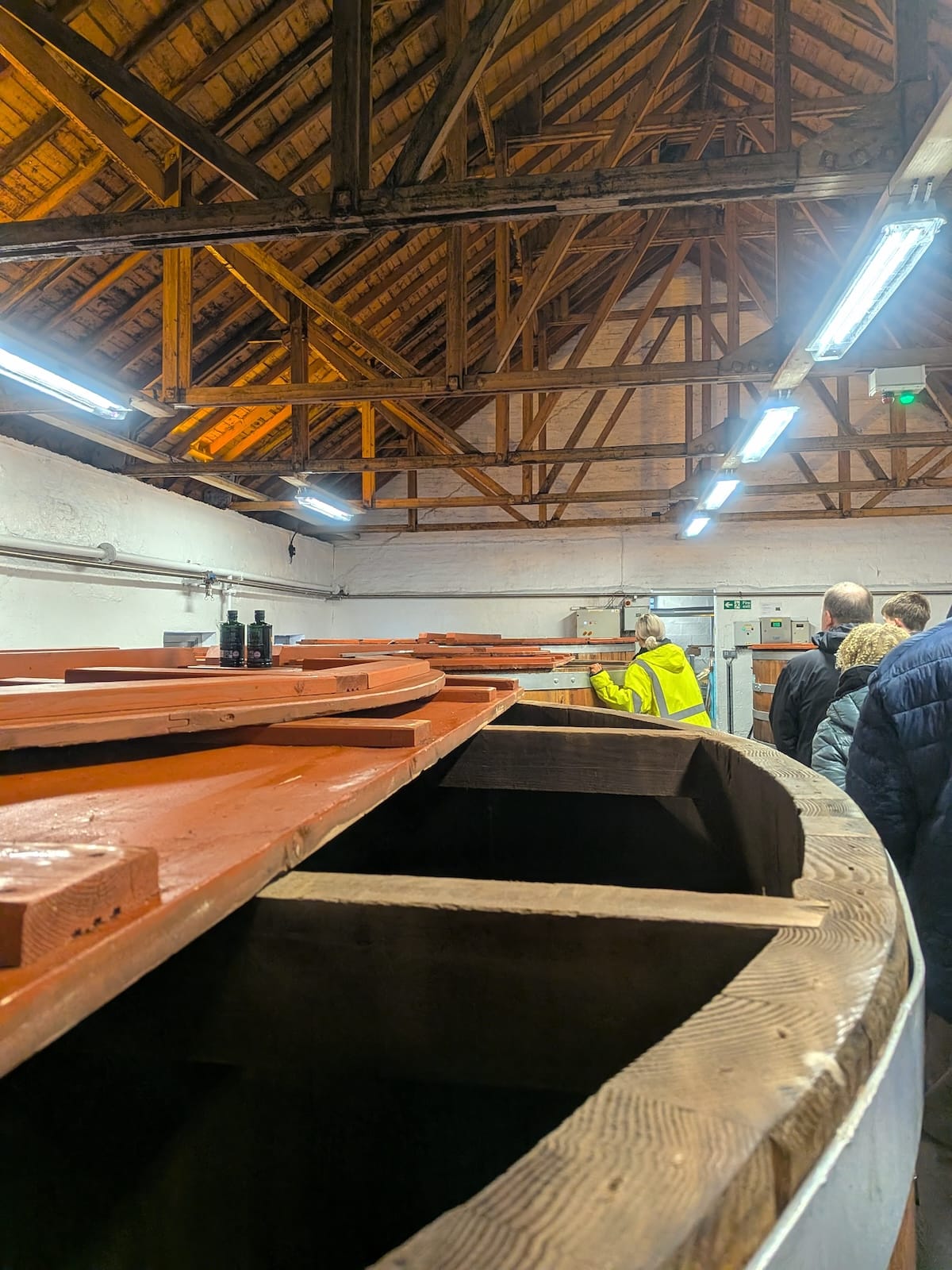
If you take a, you know, your grain and you put it through that old mash tun, you know. It's a long process. We ferment for, you know, let's see, average about 72 hours. Some of it will be a bit longer, some of it will be a bit shorter. But the point is, it's getting a long fermentation to develop flavor.
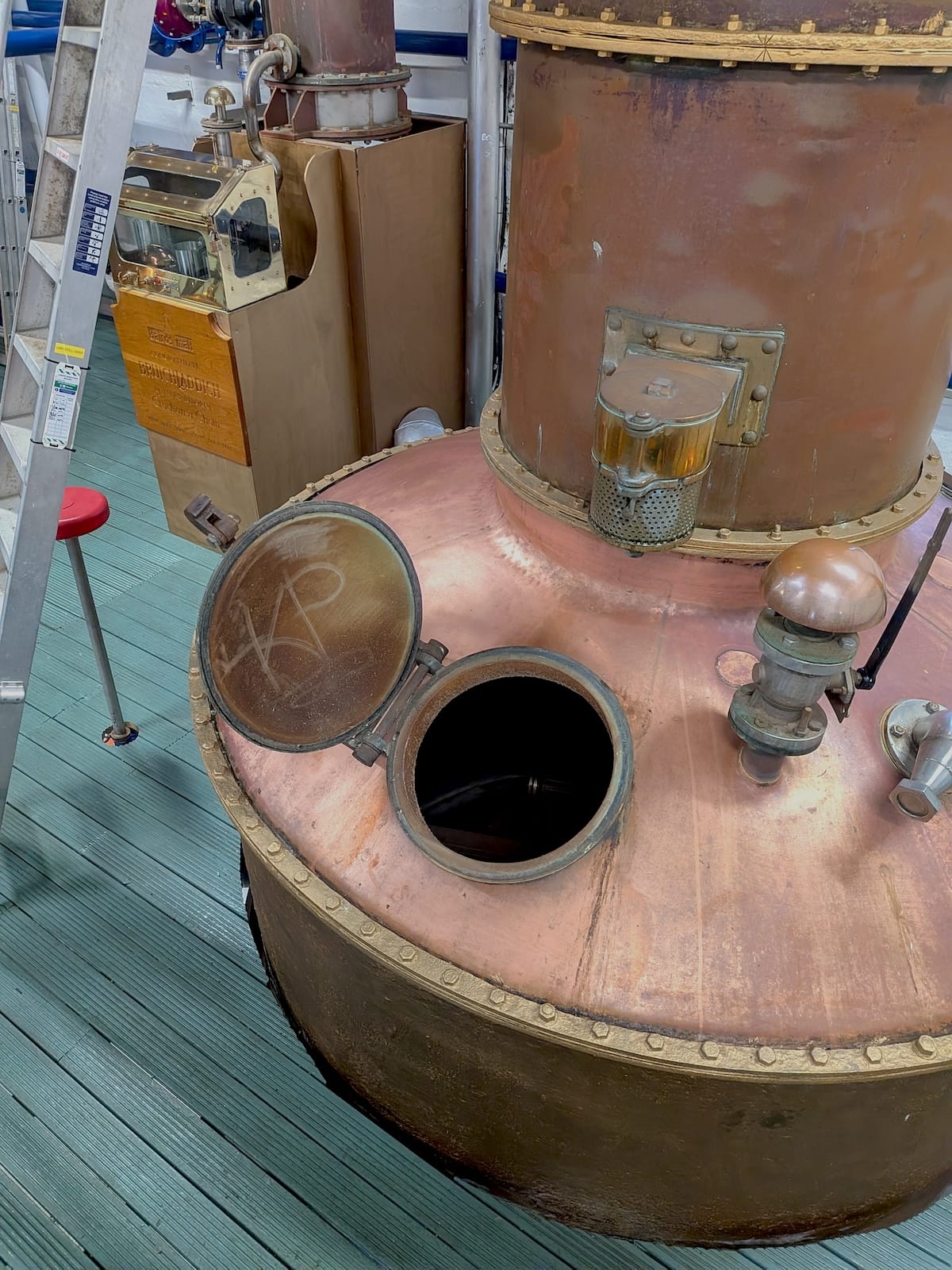
And then we put it into the stills, and we're in no rush. We're not trying to make whiskey for the world. We're trying to make the best whiskey we can. It's not about volume. So that contact with copper, that purity, that slow distillation gives us an amazing fruity, floral spirit to begin with…
And then we use good casks.
-
About Bruichladdich
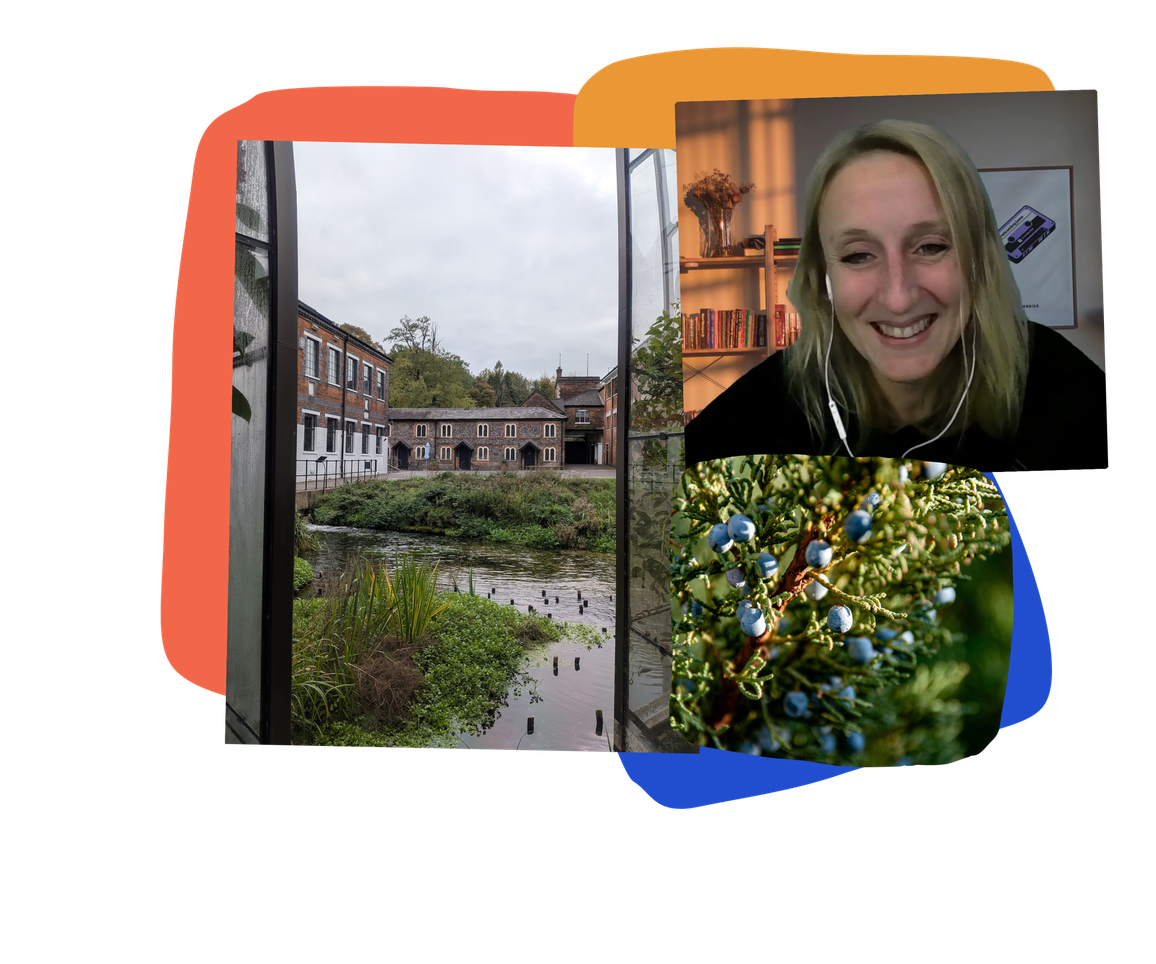
Bruichladdich has been on Islay since 1881. It's Victorian in a literal sense — the original equipment is unusually well-preserved, which tells you something about how they've chosen to operate.
It sits right on the shore, and the views from the front door are striking enough that I spent a few minutes taking photos before I went inside, even though it was spitting rain and the wind rendered my umbrella completely useless.
The modern chapter of Bruichladdich is where it gets interesting….
You see, the distillery closed in 1994 — the industry was contracting, and it was one of several Islay distilleries that went dark during that period. It sat silent for seven years.
Then, in 2001, a wine merchant and an entrepreneur bought it — along with the 6,000 casks of aging whisky sitting in the warehouses. Some of that stock went back to the 1960s!
And at the center of the revival was Jim McEwan: one of the most celebrated figures in Scottish whisky, a master distiller who'd grown up in the industry and brought both the craft knowledge and the credibility to actually make it work.
What they built was deliberately anti-corporate, independent-minded, and vocal about things the broader industry wasn't really talking about at the time — provenance, terroir, transparency about where the barley came from. They treated whisky a bit more like wine, which made sense given who was at the helm.
The result is the Bruichladdich we know today: a distillery with a distinct identity on an island full of them.
And the person at the center of that story today is Adam, who you’ve already heard from.
Adam is Bruichladdich's master blender. In the context of single malt whisky, "master blender" doesn't mean he's sourcing from other distilleries — that's a different conversation, and if you want it, it's in the episode before this one.
Here it means something different: It means he's managing hundreds of different casks that are all aging differently inside Bruichladdich's warehouses, and deciding how to combine them into the final product. It's part science, part intuition, and a lot of patience.
Adam grew up on Islay. He started at Bruichladdich as a tour guide — before he was even really a whisky drinker — and worked his way through every corner of the operation. He eventually took over from McEwan.
It’s a lot to step into…
Legacy / Responsibility
ADAM: I'm very lucky in that my parents moved to Islay in the very early 80s. Yeah, I think 1981, I think. So a few years before I was born. So, I was born and raised in Islay, and I think you know… incredible childhood. Like it was so much freedom, and a beautiful place to grow up in.
I'm so proud to be from here and love everything about Islay. It's a beautiful place. Um, and actually, I could appreciate it more because I've got two kids, two girls, and raising them just now here.
It's just such an amazing place, you know. When they can recognize birdsong or they, you know, [are] just like in touch with the island, the people, the places, it's a lovely thing.
But yeah, growing up, I think you are surrounded by distilleries. I guess I was growing up through the 80s and 90s. Whiskey wasn't… as kind of accessible, I suppose, as it is today. Even back then, you know, distilleries were closed.
So, Bruichladdich was closed from 1994 until 2001. And the distilleries that were there weren't really visitor centres; they were whisky factories, you know, so there wasn't that same tourism, come in and see what we do. It was kind of starting, through the 90s.
So, I wasn't really exposed to this kind of whisky that much, and my parents weren't big drinkers— they're both nurses, you know—and, as we grew up, you know, your aunties and uncles and everybody would be around, and you'd be having a wee taste and you'd get your finger in a dram or something and have a taste when you were kind of 12 years old. It would just put you off whisky, you know, because, at that age, it was so strong, so kind of fierce— the flavors that… It wasn't for me, but as I grew up, you kind of start to learn a bit more about it….
And to be fair, when I started working at Bruichladdich, again, I wasn't a whiskey drinker at all, really. And as soon as I had people explaining it to me and seeing what was actually going on in terms of the production and what went into it, and the passion. It was so much bigger than just that bottle of whiskey at the end. When you get that, then you really appreciate it.
I mean, we call it spirit. It's the spirit of the people, and the place is in that liquid. I think it's called spirit for a reason. There are so many kinds of human terms, you know. Even things like maturation, you know.
You think about a whiskey—as it develops, as it ages in the cask— and how it changes and mellows. You think about it again, you know, as a youngster, you know, you've got that energy and vitality, and you age, and you round out, and you know, you become more wise, you know, hopefully anyway.
Then I think that, yeah, that's what whiskey kind of is. And you really appreciate those flavors, and yeah, again, I'm lucky that over the last 20 years I've been working at Bruichladdich, and I've been able to just do… working as a drudge guy to telling the story was a great start.
And then working in the warehouse, mashing, distilling, and then getting into management, and all of the times when, you know, it was Christmas time, and you needed to go and pack some bottles into cases in the bottling hall, and you do that.
So, you kind of see every aspect of the distillery, and then, again, for the last 10 years, I've been a head distiller and just kind of promoted to master blender. So, with the, I suppose, the experience I've had, from the bottom up, has been really, really important to again, the absolute love of whisky I have now is such an important thing for Islay, for the people here, and a great way of bringing people together and, you know, opening things up and having conversations. It's fantastic for that, and it tastes delicious too.
What more could you ask for?
-
One thing becomes clear pretty quickly as I talked to Adam…. Is that we’re talking about time horizons very differently here than how I think people like you and I normally think about them.
This is a guy who has spent 20 years at one company; going to work at the same place, and spending a not-insignificant amount of time planning stocks and blends for five, ten, even twenty years out.
Because whisky can't be rushed. You do all this work to ferment and distill the grains, and you put it in a cask that you’ve carefully chosen… and then you wait. Three years at minimum, but often much longer.
The decisions you make today? You won't know if they worked for a decade.
And the whisky aging in Bruichladdich's warehouses right now—some of it was made by people who aren't there anymore.
Time/Aging Horizon
ADAM: My kids, when they watch TV, and they put on Netflix or something, they always skip the intro; they can't even sit through through the tune at the beginning, you know?
And I would say to them, like, listen, when I was little, I used to watch a program, if you wanted to watch the next episode, you had to wait a week. [Both laughing]
But with all of that kind of thing, that instant nature of everything these days. There's something really refreshing about whisky, where a three-year plan is really quick.
You know, again, I'm sitting here at the laptop at the desk here, and I'm looking at actually the Port Charlotte whisky range, and I'm out in like 2050 looking at some of the whiskey that we haven't even… how much are we going to make it if we want to make these products in 2050?
And I'm also going back, you know, okay, with [Port] Charlotte back to 2001, but when you're looking at Bruichladdich, you're going back to 1969— is the oldest stock we have.
So, you have this amazing spell that you can't possibly… You know, again, I wasn't around in 1969. I know I've got a few wrinkles [laughs], but that is well before my time. So, when you've got that breadth of time, and you think about, again, like the whiskey that was made in 2002, um, for Bruichladdich or for Charlotte. That was under the guidance of Jim McEwan, of Duncan McGilvery, you know.
The Stillman, you know, some of these guys are retired now, and then the spirit we're laying down today, you know, so I'm benefiting from that spirit. And then the spirit we're laying down today, somebody else will be putting that in a bottle. You know, hopefully I'll get to put some of it in a bottle. It's that long-term thing, that legacy, the passing on that history.
Being part of that just makes you think of it differently to the way the rest of the world kind of works. Is everything so instant? You know, when you have to lay down… And I think there's something really appealing about actually, you know, drinking a 10-year-old whiskey.
We tend to think of 10 years old as kind of like a relatively kind of benchmark, young whiskey, but 10 years? God, a lot happens in 10 years. But you try a 15 or a 20 or something like that, you know, you think about when that was made and what people were thinking and how it was laid down. Passing on that story and that transition and laying on those casks is one of the fascinating things, I think, about whisky. When you're involved in it, it's incredible.
CARO: Yeah, I mean, logically, I knew all of that. But hearing you talk about it from the inside adds another layer to it because I mean, you're talking about some literal legends here. And it's like, no pressure. You know, you have this couple of decades, and you're like, you know, don't like— excuse my language— like don't fuck it up… [Both laughing]
ADAM: Believe me, I mean, yeah, that's one of the really helpful things that… You know, I remember, like, taking over from Jim because Jim McEwen was a legendary distiller, amazing personality, you know, just, just a brilliant guy. But larger than life.
I remember I've told the story a few times. So what we would do in the mornings, back when Jim was here and when I got into management, about seven in the morning, we would have a cup of tea, and talk about the day. And there was one morning when Jim came in, and he said, 'I've got some news, fellas. I'm going to retire.'
And it was just, you know, because of this routine of going in, sitting, having a cup of tea, working out what we're going to do for the day or the week. And then….
Again, as long as I've been here, he'd be one of the founders, you know, with the guys who brought the story back to life. When he said, you know, that's me. I'm retiring. It was just this complete shock. Why would a man who's like nearly 70 retire? You know, that's crazy. [Laughing]
CARO: Yeah, like, how dare you retire and leave us here to have tea without you?
ADAM: He was, I think, the passion, the energy that he brought; he wasn't an old man. Just the vitality he had is incredible. Or, sorry, it is incredible, and then so... But when he retired, he was kind of, you know, that conversation when he kind of announced that, he was saying that, you know, Arlen, you're going to take over as production director and Adam, you're going to take over as head distiller and I thought fantastic what an opportunity, that's incredible.
It wasn't ever what I was looking for; it was just that progression, I suppose, that natural progression. Fantastic. That's what I'm going to do. And then you start to realize the magnitude of that. Oh, my God. And then there's that thing. Don't fuck it up. You know we built this thing for the last 15 years, and we're handing it over. Don't mess it up.
-
I literally can’t imagine that level of pressure or responsibility.
My horizon is a month, or a quarter… maybe a year. And even that often feels so incredibly long. But to literally spend your life making a spirit that you may not get to bottle? That you might not even get to taste one day? That’s a different thing.
And that responsibility or duty goes both ways, right?
The folks of today - they’ve got to do a good job for the people that come after them. But the ones who come after, they’ve gotta do right by the people who left them this gift.
Ownership in the Responsibility
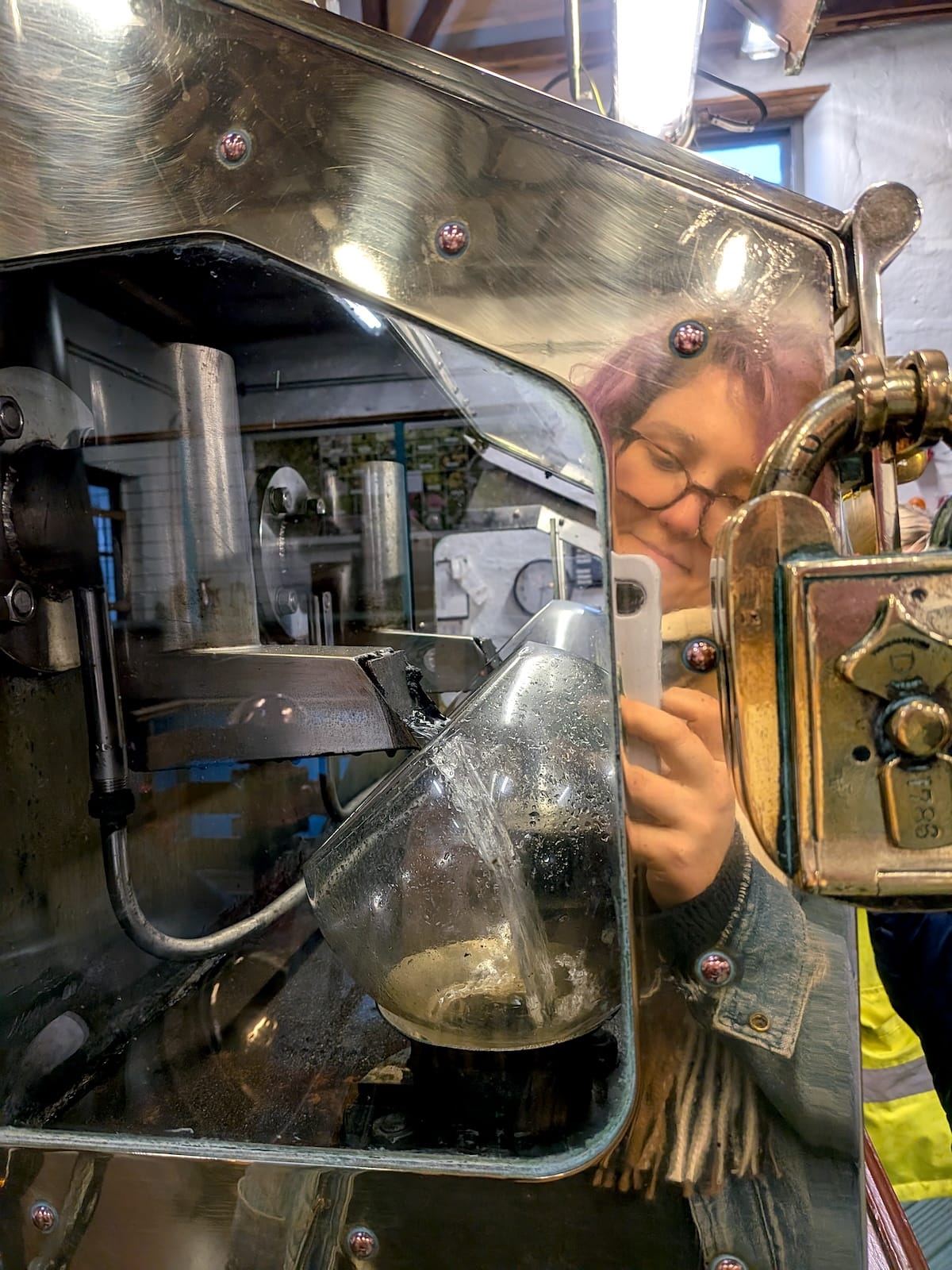
When I was on my tour at Bruichladdich, they walked us through the production process in detail, and I was struck by the scale - and age - of the equipment.
When Adam calls Bruichladdich a Victorian distillery… he’s not being hyperbolic. It’s literally full of equipment from the 1800s.
I mean… could you imagine being the person who breaks something after all these years??
-
ADAM: One of the things that I think we always kind of think about, and still talk about it now, is you just want to leave the distillery in a better place than you found it. You know, it's all about passing it on.
There's moments where, and again, when I got into kind of management and took on the responsibility, you know, there's a heavy responsibility there, but there's also these lovely moments where you know you would on a Sunday afternoon.
You get a call out, and there's no one else. The distillery's closed. Everyone's away for the weekend, but you're there. And we used to kind of go up the stairs to the office, and you'd look across the courtyard, and there are these moments where you would kind of stand there and go. Yeah, this is mine. This is so cool. I'm the only one here. I'm in charge. This is so cool.
And you do get these little moments where you enjoy that responsibility, but it's always about passing it on for the next generation. You're only ever looking after it; it's not ever really yours.
Everyone feels that, you know, when you’re not a manager, when you're a mash man still, when you're there Sunday night, starting off before. It's just the two of you there, the mashman, stillman — that's your distillery at that point, you know? You are the ones who are in charge. Or, you're in the warehouse, and you're rolling barrels, or you're taking samples, and like, yeah, I'm the guy in here. I'm doing this right now.
So, every one of us in this 100 or so people who we've got here... They're all feeling that in their own kind of way, and that's what's special about it. Everyone's got a bit of ownership of it. Everyone feels attached to this distillery. And these kind of four walls, it's an amazing thing— the spirit we have in here. It captures all of that. It's a real sense of belonging. It's fantastic.
-
I got a very literal demonstration of this after my tour.
The wind that had been battering the building all day knocked out the power, and the distillery had to close early…. But my bus wasn't due for another hour.
Thankfully, without missing a beat, my tour guide casually offered me a ride home. She was heading past my hotel on her way home anyway, she said—though I suspect that was generous.
We spent the drive talking about life on the island, and she dropped me at the door. It was an added bonus to the day—hearing about the day-to-day from someone else who’s from the Island, chose to stay, chose to make Bruichladdich part of her life, and casually offers people rides home when they need it.
That's Islay.
The Bruichladdich Way
ADAM: So much of Scotch whisky - the barley's grown elsewhere, it comes into the distillery, it's distilled, the spirit goes off somewhere else to be filled, it matures in a different place, and it's bottled in these big central mainland Scotland locations.
It’s actually only spent three days of its 10 years at the distillery — when it was distilled. So from a point of view of actually being more authentic, more honest — if it's Bruichladdich whisky, let's do as much as we can here.
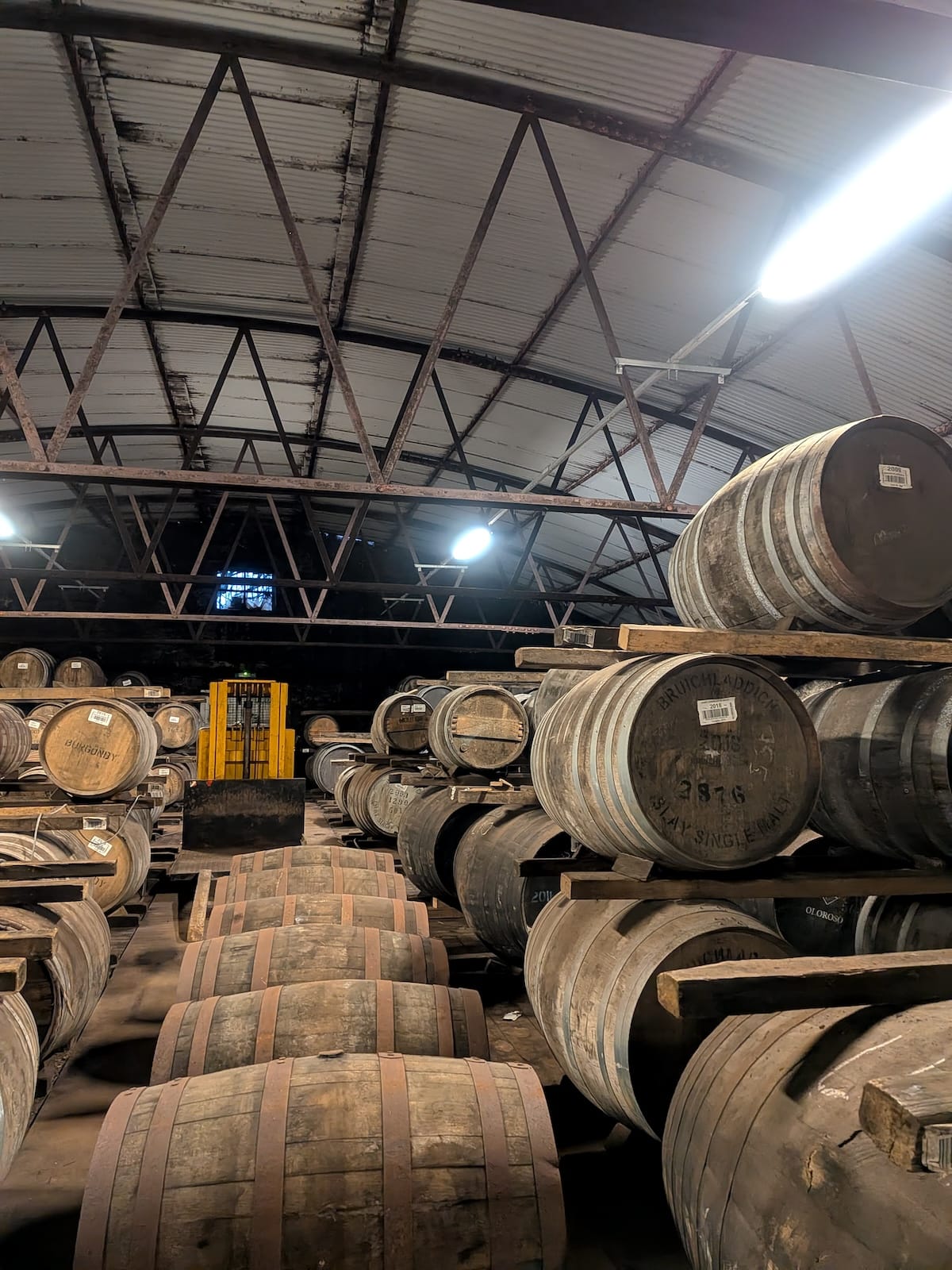
We were lucky—we had a lot of warehouse space. When Bruichladdich was bought from Whyte & Mackay, there were about 6,000 casks here. Simon, who was one of the founders, would often say that Bruichladdich bought the whisky and the distillery came free — because of the condition of it. There was a lot of work to get it up and running. But we had big warehouse space, so we could mature here. We didn’t need to export it.
When we built the bottling hall, it closed the loop. If we're bottling everything here, we can use Islay spring water. We were actually in the early days sending water with the whisky to go off and be bottled — so we were using Islay spring water. We were providing employment. And we were securing that maturation here. And actually, that's such an important thing, because the warehouses we have are right by the sea, right by the shore.
Islay's a windy, windy place — there's nothing between us and Canada stopping the wind coming in. When you're in the warehouses with this wind whistling through, and you think about evaporation and the angel's share — the alcohol leaving the cask — it's not a vacuum. Something's going in. The wood is porous, and there's that Islay air going in, interacting with the spirit along with the wood.
So it was really important to us to get that flavor in there. You get this lovely minerality with Bruichladdich when you taste it — this lovely kind of light, fruity citrus, and then this lovely minerality like warm-sand-on-the-beach, kind of salty minerality. It's because the whisky's matured here.
Such an important aspect of shaking the spirit is the place, and it's the people. Because we are based here - And the whole operation is based on the island, apart from the finance team. We keep them out in Glasgow, so that by the time they find out, we've already spent the money.
CARO: [laughs] They're that long ferry ride away. And oh no, the ferry is cancelled due to wind. Oh no!
ADAM: It's too late. We've done it. Never mind. But the business is here, everything is here.
-
That wind, by the way? That closed Bruichladdich early? That sent my glasses flying across the street and my blanket scarf tangling around my head like I was in some kind of 90s cartoon??
That same wind also cancelled my ferry back to Glasgow the next day.
This was especially funny because I had spent the last couple of days eating most meals at the only pub within walking distance, with a rotating cast of old men who had lived on Islay forever and had a lot to say about the new ferry captain - who they thought was overly cautious with his cancellations.
So, when I got the cancellation notice that night - I just had to laugh.
I grabbed one of the last seats on a small plane back to Glasgow, and tried to be grateful for a 45-minute flight rather than an eight-hour ferry-bus-then-train ordeal.
I guess Islay keeps you as long as it wants to. Apparently that's just part of the deal.
Terroir in Whisky
CARO: A lot of people think whiskey doesn't have terroir. And I know you feel very strongly that it does. And so I would love to hear a little bit more from you about terroir and whiskey.
ADAM: You're not busy the rest of the day, are you? This is going to be interesting…
CARO: No, great, great. I'll settle in. You know, I got snacks. We're good.
ADAM: Yeah,if you think back to, you know, I was talking about Mark Rainey and Simon Coffin, the wine merchant that had been involved in and, you know, working with the greatest vineyards in Bordeaux.
That's the world he lived in, you know, and so when he started getting involved in whiskey, there wasn't that same… I mean, don't get me wrong, I'm sure in wine there are people who just, you know, grow grapes and don't put the same kind of thought in.
But what you can see with whiskey was this amazing kind of cultural product, this amazing tradition, this skill, but the the kind of demand for more and more whiskey over the years had led to more automation, more efficiencies, and and it almost got away from the the origin of what whiskey was, where it was an expression of the land, of the soil, where effectively making whiskey was a way of preserving grain, you know, and a way of paying your rent, and it was a way of um, you know, to kind of celebrate in the culture.
It was, you know, whiskey was really important. But it's become more of a commodity. And the barley that was grown in Scotland was grown to be high-yielding, you know, to give the farmer a good crop, to give the maltster a good crop, to give the distiller a good yield.
And while that is not necessarily a bad thing, flavour had been lost, in many cases. It wasn't really talked about. And even today, a lot of distilleries don't talk about grain. They just don't.
-
Breaking in here to say that they literally don’t, y’all.
I visited a dozen distilleries in Scotland on this trip, and I’ve been to more than a dozen around the world. It’s very rare that a brand offers up any info about their grains, about their malt, about any of the raw products that go into their whisky. The focus is almost entirely on the barrel, with a little about the fermentation and distillation thrown in.
And I think this is part of why there isn’t a lot of respect for whisky as a product of terroir… because it usually isn’t a product of the place that made it. At least not in the same way it is, for say, wine or mezcal - which is the love of my life and my particular alcoholic specialty.
My expertise comes from that world and so… I’m just gonna be completely honest here: I was skeptical about this idea of whisky having terroir.
But after talking to Adam… well, let’s just say he makes a very convincing case.
Local Barley
ADAM: Barley. It's such an important thing for us at Bruichladdich to focus on, because when you think about how you make whisky — it's barley, water, and yeast, then you age it for a minimum of three years. That's in a nutshell how you make whisky. So barley is where you get your alcohol, your flavor. It's the source of everything. And yet nobody really talks about it in the whisky industry.
For many years, the success of Scotch whisky and this kind of global demand led the barley breeders and the industry to focus on making as much as they could, because the demand was there. The whisky quality is so good, you know, when you think about the craftsmanship, the skill, the tradition, the flavors — Scotch whisky is absolutely fantastic. But to fill that demand, the emphasis on the flavor of the grain got lost. It was about the yield. And over time — it's a gradual thing — that's kind of what happened.
So, I think the opportunity for Bruichladdich when we reopened was — with Mark and Simon and Jim and the rest of the team — we wanted to bring Bruichladdich back to life and bring the community with us. And it was very much about focusing on the ingredients, because that's what Mark and Simon understood from wine: that quality matters at the source.
A lot of the conversation around whisky was "it's just grain, barley's barley, it doesn't matter the variety — it's all going to give you the same thing, it's about the stills, the copper, the fermentation." And so we set out to prove that barley equals flavor.
We started distilling again in 2001. We were setting things up, getting the distillery ready, and then in 2003 we started using organic grain — so that was a single farm from the northeast of Scotland.
We were thinking about how it's grown and where it's grown.
And if you've got an old Victorian distillery, you want to use barley that's effectively from the same time — so you go back 60, 70, 80 years when people weren't using fertilizers, when farming was very different, and things were just by nature organic.
So, bringing that back in, let’s focus on that, let’s focus on single farm. You could taste the difference in the spirit. And you could get that character coming through as the whisky matured.
2004, we worked with our first Islay farmer to grow barley for us.
2005, we didn’t actually grow any Islay barley. Everyone was hanging around, waiting to see how it performed; was it a success? [Laughs]
So, 2006 was the next distillation, 2007, and year upon year it's grown — we've gone from one farmer to about 20 farmers just now.
And the thing about that is we get different flavors, we get different yields — the soil is different, the conditions are different, the weather is different.
So, we find that when we distill Islay farm, whether it's a single farm or a culmination of farms combined for batch size, we find there is a real difference in the flavor of the spirit we produce.
-
This is actually the thing that surprised me most about this conversation.
In mezcal, the relationship between producer and grower of the agave is central to everything — they’re usually the same person and even when they’re not, it’s baked into the culture. I didn't expect to find the same logic operating here. But once you can prove that the farm shows up in the glass, you're on the hook for what happens on that farm.
Twenty farms. On a small island. That's not just sourcing — that's a relationship. And Adam's pretty clear-eyed about what that means.
Community Impact
ADAM: Thinking about the flavor of the grain and where it comes from, it becomes really exciting — but you also start to become aware of your influence [as a distillery]. If we just want the highest-yielding barley, the farmers will work in a particular way to give us that. If we start looking for organic, biodynamic, then we create that market, and it becomes something there.
And with the biodynamic [grain] in particular, you start to get this insight into agriculture.
There's this farmer in Wiltshire, Richard Gantler. He's amazing. His farm sequesters ten times more carbon into the soil than his farming activity emits. He doesn't rely on monocrops. He's rotating, mixing crops. The biodiversity of his farm — it's just good after good after good. So if we're supporting that, it's all part of really good stuff.
So we start off thinking about flavor, prove it to ourselves, and then as you take it forward, it becomes more about that community and agriculture. You realize the responsibility you have — not just to make good spirit, that’s number one, of course. But alongside that, we have to be good partners, good stewards, thinking about our community.
Actually, even Wednesday night, we had a session with a couple of agronomists that we invited. Through the distillery, we’ve built these contacts with these agronomists, these really experienced guys, to be able to pass that on to the growers to help them look after their soil, their rotations.
They don't have to take the advice — it's there if they want it. But we want to support that as much as we can.
CARO: Yeah — you're becoming like part farmer over here. Learning so much more about crops than I'm sure you ever expected to when you became a tour guide. [Laughs]
ADAM: Absolutely, yeah, and it leads you off into these different roads. You realize how important it is to do what we do. We talk about sustainability, about passing things on to the next generation. A fine distillery that's not being a responsible partner in terms of the farming — then the farming collapses, and the distillery will be, too. So it's really important to help support the right decisions.
-
Twenty years of thinking this way eventually produces something you can hold in your hand.
In 2025, Bruichladdich released a whisky called Old Skool — built around exactly the approach Adam just described: Islay-grown barley only, youngest whisky in the bottle is ten years old, and every farm that's grown for them going back to 2004 is listed by name.
Celebrating 25 years
ADAM: It's 25 years this year, which for us is a bit of a milestone. We don't need much of an excuse for a party — but thinking that we’ve celebrated 25 years since we reopened….
Bruichladdich, throughout its history, has opened and closed many times, you know. So this is a really nice period of stability, and something for us to really celebrate.
I’ve been here for twenty … I started in 2004, so twenty-two years. Not since day one, but…
CARO: Pretty close.
ADAM: Pretty close.
It’s just something that’s really fun to celebrate.
So, the whole year, you know, releasing different whiskies that celebrate a lot of the things that we’ve done, what we do…
Every year, the festival. Every distillery on the island has an open—
CARO: It’s on my bucket list. I’m coming at some point.
ADAM: You’ve gotta come.
What we do at Bruichladdich, in the morning, we have a masterclass. A big, big masterclass. It’s a tasting of about 250 people, usually. This year, it's going to be much bigger.
We've got a bigger venue. We’re just putting the roof on it now.
CARO: [Both laughing] You literally had to build your own venue.
It’s a warehouse [where] the racking was very old, so we needed to take the casks out, and the roof was falling apart and starting to leak, so we had to take that apart. Now we’re putting the roof back on, and it’s hopefully going to be done in time for the festival.
But some of the people who've been really important over the last 25 years — usually it's just me speaking and doing the tasting, but we'll get some other voices up, some other stories.
There are some amazing stories, some fantastic stories that you wouldn't believe unless you hear the person standing there telling you, “this is what happened.”
CARO: I’m sure every hotel room on Islay is already booked, but you're making me want to plan a trip…
ADAM: They probably are just now, but you know, bring a tent…
So, that’s probably the big thing…25 years for us, loads of cool stuff coming out, big celebrations, and just trying to get some fun in there. That’s what it’s all about.
CARO: Yeah, totally. It’s been on my bucket list, and now it’s crawling up even further…
ADAM: Well listen, when you make it over, get in touch. We’ll probably put you to work, actually. You’ll be one of the barmen…
CARO: [Both laugh] Thast sounds fun. Put me to work!
ADAM: You know, be careful what you wish for. Actually, there was actually a guy, Koichi, from Japan — in 2006, he came along. He wanted to go around every distillery in Scotland. He'd done a few, and he got to Bruichladdich, and Jim got a hold of him. He stayed working with us for six months — until his partner said, "Look, you'd better come home now, or we're done." [Both laughing]
CARO: This is how I move to Islay!
ADAM: You'll be in there in no time, yeah.
-
I did not make it to the 25th Anniversary party, to my serious disappointment, but am now taking sign-ups for people who want to come with me next year. [Laughing]
Don't worry, we won't take the ferry. But you may be on your own to get home — if Adam's threat to put me to work has any truth to it, I might just stay.
It sounds like Bruichladdich has that effect on people… and I think I understand why. Because underneath all of it — the warmth, the community, the sense of belonging Adam talks about — there are a lot of deliberate choices.
Choices that might cost more, take longer, and make the logistics harder… but ones that feel worth it.
Doing things the hard way
ADAM: One of the great things when Rémy Cointreau bought the distillery back in 2012 — they're a family company, and they haven't changed anything about what we do. They've just enabled us to do it faster, bigger, better.
We were building warehouses on little bits of land that we had—trying to do it on a shoestring budget, whereas when Rémy came in, it was: "This is long term."
They have 100-year-old cognacs. They're a 300-year-old business. They understand that long-term aspect. If you're going to build warehouses, build big stone warehouses that are going to be there in 100 years. So that's what we've been doing with their investment, which is incredible.
And a huge part of that is the commitment to bottling on the island. Because if you think about the logistics of bringing in all your empty bottles to Islay, filling them here, then shipping them out around the world — that's extra cost, extra time, extra everything.
It's much easier to do what every distillery does and just ship it off. And some whisky is matured on Islay — some distilleries mature more than others on the island — but a lot of it is: as it's distilled, it's filled into a tanker and it goes off, and it’s matured in a big, massive warehouse complex next to the bottling hall on the mainland. Everything is logistically easier.
And you know what? It's fine. It’s still great whisky. There's nothing wrong with doing that. But for us, it's just the Bruichladdich thing. It’s the way we do things about Bruichladdich. It's about authenticity. It's about provenance. It's that sense of place. And for us, it has to be Islay. It has to be done here.
There are so many things we do that financially don't make sense. Our whisky is more expensive than most competitors. But I think, when you start to break that down — how we make it, why we make it — it's not a race to the bottom for us. It's not about as cheap as we can do it. It’s about the best value we can get.
So, actually, when you think about how it is more expensive… We bottle at 50% ABV, so there's less dilution, less water we’re selling you. The quality of the wood, the number of people — it's people, not machinery. There's nothing automated. We're operating a Victorian distillery in effectively the same way as we used to.
I was on a tour the other day, and we were talking about the strike temperature—you know, when we put the water in. It’s 149 degrees Fahrenheit.
In the UK, nobody uses Fahrenheit. No one knows what it is. It’s all Celcius here, but we've always worked in Fahrenheit. So as every mash man gets trained, they’re told: 149 degrees Fahrenheit.
CARO: In their head, they’re thinking, “I’ll google it later.”
ADAM: Because gauges in the tun room are in Fahrenheit as well, it all works.
CARO: [Both laughing] That's so funny. It’s just this random group of Scots who understand Farenheight.
ADAM: It is! There are six people on this remote island who understand Fahrenheit.
It's just little things like that. Those peculiarities. It’s a tiny little thing, but it’s done by people.
The skill is passed on from person to person. It's not about following a rulebook. You know, we have procedures, and we have things we need to do, and we know how to make whisky, but there's a human element in there. And that's really important in actually shaping the spirit.
We'd be cheaper if we just did it by machinery. If we had one operator running the whole place from a computer. But we don’t. We have people, and they're able to respond to the changes they see in the barley… You hear the mill isn't running quite right; therefore, you can adjust it.
You go into the tun room, and you can smell something's different from last week, and it’s a different grain we’re using this week… It's those little things. We're really proud of that. And yes, it does push the cost of what we do up. But ultimately it's about the value. It’s about the preservation of heritage and history.
If you bring it down to just how cheap you can sell it, that’s not for us. That’s not our game.
CARO: Yeah, that's not a game I'm trying to play. If we want cool stuff, we have to pay for cool stuff.
ADAM: Absolutely. This is it. And I know that at times like this, when the cost of living for everyone is going up — whisky is a luxury in some ways. But, actually, if you're a whisky drinker and that's your passion, your thing — you sit down, you enjoy a dram. You want something special. You work hard, you earn that money, and you come home; you want something special. And that's what our whisky's for.
And actually, one of the great privileges for me is when I do travel, and you do meet people for whom it's a really special thing…
A couple of years ago, we were in Glasgow, my family and I staying one night before flying out the next day.
As we were having breakfast, there was a guy who came over. He said, "Do you work at Bruichladdich?" — I was wearing a Bruichladdich jacket. "Yeah, I do." We got chatting. This guy was from the US. His friend, who loved Black Art, passed away. They had a bottle of Black Art that he had wanted them to drink — and they wanted to drink it at Bruichladdich, in memory of their friend.
And you think… what an amazing thing. These guys have traveled to the other side of the world, in respect for their friend who passed away, but because of the whisky he loved from Bruichladdich. That's just absolutely incredible…
CARO: I literally have chill bumps. That’s a story you want to be a footnote in.
ADAM: Exactly that. That doesn't need us to do anything — but to know that that whisky meant so much to those people. It's just really humbling. It’s a privilege.
Conclusion
Stories like this get me every time.
Those guys flew to the other side of the world to drink a bottle of whisky in memory of their friend. That's not a small thing. That's a life organized around the love of a particular dram, and a distillery that meant enough to someone that it became part of how he was remembered.
I said in the last episode that my attitude with good drinks is respectful, but not precious. Every pour doesn't have to come with a ceremony. But it's worth remembering, sometimes, what goes into what we’re drinking.
The Stillman who learned Fahrenheit and passed it on. The twenty farmers growing barley on Islay because someone asked them to. The cask from 1969 that was filled by someone who will maybe never get to drink it.
The woman who gave a stranger a ride home through a storm because the distillery had to close early and the alternative was standing in the rain for an hour.
I only spent two and a half days on Islay. But I ate most of my meals at the local pub alongside a rotating cast of old men. I got rained on. I lost power. I missed my ferry and had to catch a flight.
And I was reminded of something I keep learning on these trips: the more remote the place, the more helpful the people. There's a kind of generosity that comes from actually needing each other.
So, get on the ferry when you can. Or just find a bottle made by people who genuinely care what went into it.
Outro
Thanks to Adam Hannett — master blender, Islay native, and now the person most responsible for making a non-driver like me seriously consider an extended stay on a remote island.
Everything from this episode is in the show notes at betweendrinks.co/singlemalt.
If you want more Between Drinks in your life, the newsletter is where I keep the conversation going between episodes — what I'm drinking, where I'm going next, and the occasional trip I'll be taking small groups on. So, if you want to come with me on one of these, that’s where to sign up.
Thanks so much for listening, and I hope to see you for the next episode, where we’ll be diving even further into the great drinks coming out of Scotland.
Show Notes
- Bruichladdich: Website & Instagram
- Old Skool — Bruichladdich's 2025 release built around Islay-only barley, with every grower listed by name
- Black Art — A premium whiskey from Bruichladdich, mentioned as the bottle brought to Islay by a group of guys in memory of their friend
- Islay Whisky Festival — mentioned by Adam, on Caro's bucket list
Subscribe
Subscribe to the show in your favorite podcast player to make sure you never miss an episode.
And maybe leave a rating/review while you're there? 🙏
Related Episodes
 Caro Griffin
 Caro Griffin
 Caro Griffin
I didn't make it to Bruichladdich's 25th anniversary party this year, to my genuine disappointment. So I'm doing the next best thing: taking informal sign-ups for anyone who wants to come with me next year. (Not joking.)
Drop your email here to be kept in the loop!